Auka Productions presents a tender new play Hot Pot, set over a shared meal and examining friendship, gay identity and the small betrayals of adult life. Following four university friends reuniting at a hot pot restaurant after the Covid pandemic, Hot Pot begins as easy laughter and the retelling of old misadventures. As they catch-up, the meeting slowly settles into a more searching conversation. Between shared plates of food and the simmering broth, layers of facade peel away to reveal how time has rerouted the friends in many ways.
Hot Pot is a play that honours the complexity of friendship, identity and survival. Drawing on the lived experiences of East Asian perspectives, the play explores gay identity with honesty and nuance against a cultural backdrop that can be hostile or indifferent. The conversations in the narrative about secrecy and the pragmatic demands of family and culture surface through the characters’ histories and revelations. The ordinary act of sharing a meal becomes an act of reckoning, questioning whether belonging demands conformity or can be rebuilt through chosen ties, and whether leaving is always liberation or sometimes another form of loss. The play invites audiences into an intimate single evening that subtly reframes how its characters understand home, love and the cost of authenticity.
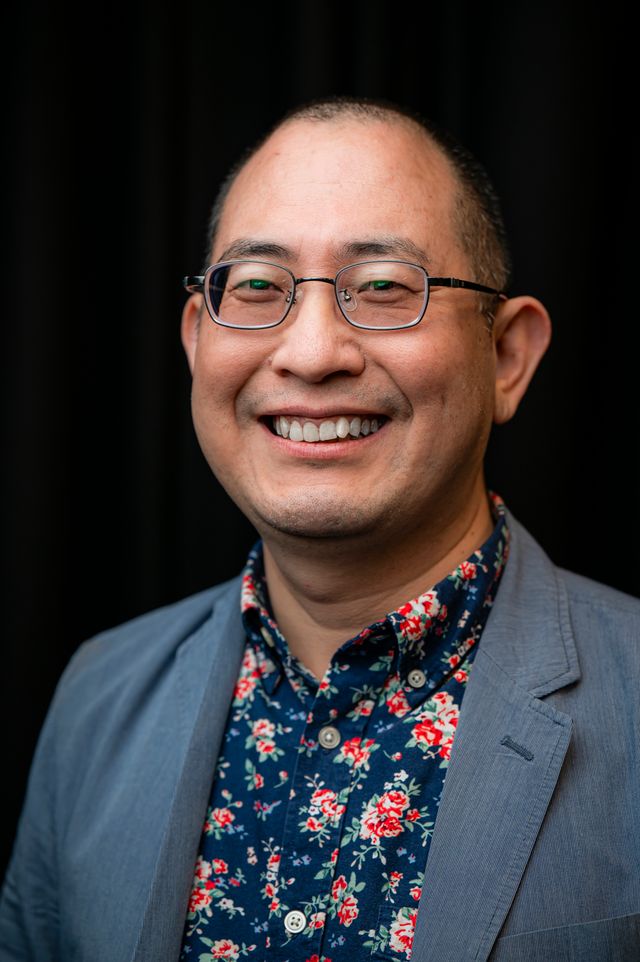
Hongwei your previous work includes poetry (*Dream of the Orchid Pavilion*) and academic/nonfiction texts (*Queering the Asian Diaspora*). What inspired you to make your debut as a playwright with *Hot Pot*, and how did the process of writing for the stage differ from your previous forms of storytelling?
I trained as a cultural historian. This means I am interested in culture as a way to document history and history manifested in culture. My specific research interest lies in queer history in East Asia and the Asian diaspora. Queer history fascinates me, because much of it is still unknown due to the long history of queer erasure. Despite the long history of same-sex intimacy, that queer history in East Asia is not widely known. And yet for LGBTQIA+ people, understanding that history is crucial. My research and creative practice, therefore, strive to uncover, understand and make visible that history. My academic and nonfiction work such as Queering the Asian Diaspora focuses on recording and understanding that history. My poetry collections (The Passion of the Rabbit God and Self-Portrait as a Banana), poetry pamphlet (Dream of the Orchid Pavilion) and stage play (Hot Pot) translate that history in literary and theatrical forms to a contemporary audience. So I see my academic work and creative work as cross-fertilising: neither can exist without the other. Together, they shed light on the richness and complexity of the Asian queer history.
The “The Layered Symbolism of Food” centres around a single evening at a hot pot restaurant. What made a simmering hot pot the perfect physical and metaphorical backdrop for peeling away the characters’ facades and exploring unspoken truths?
Confucius once said that food and sex are both part of human nature. I take it to mean that they can tell us a great deal about who we are and what we want to become. That’s why Hot Pot has both elements and is essentially a play about identity and change. What we eat and how we eat are never neutral; they are saturated by social and cultural norms, and yet they embody huge potential for change. The tension between social structure and individual agency underlies the story of Hot Pot.
Hot pot is one of the most popular meals in East Asia. It is often eaten with friends and family, and symbolises togetherness and reunion. At the table, everyone cooks. They help themselves and each other to food. For a play about four university friends getting together, hot pot is a perfect meal. The simmering of the food is a good metaphor for the intensity of emotions and relationships. Yes, there will be steam; there will be the sound of food boiling; and there will be lots of eating and drinking on the stage. As food and wine go down, people become less inhabited and more daring to talk about pasts and presents. This is a moment where hidden secrets are released, and repressed emotions are expressed. The hot pot dinner is therefore a perfect setting for friendship, love and missed opportunities.
Hot Pot touches heavily on the pragmatic demands of family and culture vs. living an authentic life. How does the play balance the hostile or indifferent cultural backdrops the characters face with their search for personal liberation?
Hot Pot is a play about queer life in much of East Asia, where state censorship, family pressure and heteronormative social values work together to restrict queer freedom. The play depicts multiple pressures that queer people face, but it also sheds light on the different choices and coping strategies many people make. Although some queer people choose to stay in the closet and get married heterosexually, others courageously pursue their personal freedom, refusing to yield to social pressures. Eventually it’s about the choices that people make and the ramifications of these choices.
When it comes to queer East Asian narratives, it is very easy to fall into the trap of ‘repressive hypothesis’, depicting East Asia as a hostile place and queer people as powerless victims of the state and the heteropatriarchal system. While challenges do exist, and the play does not shy away from them, Hot Pot also portrays gay men who are keen to pursue same-sex marriage, single women who refuse to get married and have children, straight allies who support their queer friends secretly, and people sticking to their dreams and ideals. Eventually, Hot Pot paints a nuanced picture of queer life in East Asia, as neither pessimistic nor optimistic, but intrinsically heterogenous, complex and lived.
In what ways do you think the pandemic uniquely altered queer and diasporic friendships and accelerated these “reckonings” of adult life?
The Covid pandemic is an important historical backdrop for the play, and for the four friends’ friendship. Of course there was an extended time of separation, which made the class reunion seem particularly urgent and desirable. Also, different pandemic experiences shaped people’s varying understanding of social control and personal freedom. Many Asian countries enforced much more stringent lockdown measures than their Western counterparts during the pandemic. In China, for example, some cities were under lockdown for several months at a time, when people could not step of their doors. There was a lot of anger and frustration from ordinary citizens. All these historical experiences feed into the play, bringing together discussions of sexual freedom with political freedom.
Hot Pot is a play for adults (including young adults), as it explores many serious topics such as sexual identity, growing up and freedom. In the play, the protagonists discuss whether and how to come out, how to live an authentic life, what freedom means and how to pursue it. The play spans a period of 20 years, from the four friends’ university life to their 40s working life. We see the crash of dreams by reality, past idealists turning more pragmatic, cultural differences and diasporic experience, and the price one must pay for personal freedom. In many ways, this play is a philosophical musing of how people navigate modern society and contemporary life in Asia and beyond.
As an academic who has extensively researched queer Asian diaspora and transcultural intimacy, how did it feel to step away from analytical theory and instead channel those exact themes into raw, emotional character dialogue?
The job of a cultural historian is to document and critically reflect on the history of a specific historical period or community. My academic and nonfiction book Queer China is a cultural history of the queer community in China’s post-Mao and postsocialist period. Queering the Asian Diaspora is a cultural history of the queer East Asian community in the UK and internationally since the Covid pandemic. Important as these books are historically and scholarly, it is difficult to engage the readers with academic theories and historical facts. We usually relate best to people and stories. This is where theatre does best: in translating abstract theories and historical facts into stories, and in demonstrating different arguments and subject positions in a safe environment. While following the character’s lives as they unfold, the audience learn to empathise with people whom they have never met, and form their own judgements where there are no real-life consequences. In other words, we live different lives watching a play and the theatre functions a good pedagogical tool for social change.
While it may sound odd to say it, academics are also real-life people with stories and feelings. Many academics hide their emotions behind the façade of their professional identity and in an abstruse language. For a queer researcher with a strong decolonial politics, the personal is political. What concerns me every day, the question of cultural identity for example, may be the shared concern of the East Asian diasporic community. Writing it out in a fictional and dramatic format is the first step to start a conversation with the community and with the wider society. Observing people and trying to understand how they express themselves physically and emotionally is an important skill for both an academic and a playwright.
With Hot Pot being your very first stage play, what specific stories or emotional nuances did you feel a live theatrical production could capture that poetry or nonfiction couldn’t?
Hot Pot is my first full-length stage play. I have written some short plays, most of which centre on the queer East Asian experience in the UK. In February 2026, I performed in a 15-minuite short play I wrote called Zizzi at Birmingham Hippodrome as part of the New Earth Theatre Theatremaker Academy. Coming from a writing background, I find theatre as a cultural form fascinating. The written script is only one component of the storytelling. The sound, the lighting, the set, the acting, the movement … they all tell the stories in different ways. Together, they form a multi-dimensional, multi-sensory and immersive experience so the audience can feel it more directly and intensely. This is something that a reading experience cannot replace or replicate.
I feel very lucky to work with Auka Productions, a theatre company that is dedicated to telling untold stories and amplifying marginalised voices in society. A queer East Asian story is precisely such a story that needs to be told. Auka Productions has assembled a wonderful team of cast and creatives. Every artist is so talented, and they really bring their craft and artistic vision into the play. Creating a piece of theatre is a collaborative process, and the team has worked so hard together. The four friends’ friendship looks very ‘real’, partly because the team has developed deep trust and friendship in the rehearsal process. You can see the actors’ different personalities and feel their care for each other in the live performance!
The play explores gay identity “against a cultural backdrop that can be hostile or indifferent”. How does the safe, enclosed space of the hot pot table contrast with that outside world, and does the restaurant act as a sanctuary or a pressure cooker for them?
A hot pot meal is usually eaten in an enclosed space such as a private home or a restaurant. So it feels like a safe environment to talk about work, life and politics. This feeling of privacy and security enables the four friends to express themselves freely without worrying out social pressures. But the story takes place in an East Asian context where LGBTQIA+ rights have not been recognised and where there is a strong pressure for people to conform to social norms. The four friends’ self-expression cannot be completely free, especially given the competitive nature of their jobs and their relationships. So the hot pot dinner really functions both like a sanctuary for queer friendships and relationships, and a pressure cooker for tensions to build up and for pent-up energies to explode in the end.
At the dinner table, the four friends reminisce about the past, which brings back their university life when the four shared dreams and intimacy. The present is intercut with the past through frequent flashbacks, and this effectively brings the actors out of the restaurant setting. The flashbacks help build the characters and their relationships, giving them historical depth and emotional complexity. The play also creatively retells the story of the Rabbit God, patron saint of LGBTQIA+ people in East Asia. So there is an element of mythical, surrealist, dramatic storytelling which takes the play out of its default mode of naturalism. This enables the queer protagonist to speak directly of his love that ‘dares not speak its name’ in the restaurant setting. So the Rabbit God monologue is a useful framing device that breaks the monotony of the restaurant dialogues and that foregrounds the queer protagonist’s voice.
The play’s content guidance notes that it addresses homophobia, racism, and parental death. How did the cast and creatives approach these sensitive, heavy topics to ensure they were portrayed with honesty and nuance rather than melodrama?
For a play about the queer East Asian experience set in the immediate aftermath of the Covid pandemic, perhaps it is not surprising that the play contains discussions of homophobia, racism and parental death. But these topics are dealt with in a brief and culturally sensitive manner: acknowledging and critiquing them, instead of sensationalising them or being overly didactic. While it may sound counterintuitive, the dialogues are actually full of humour and fun, which reflects the friendship and trust between the four friends. They are able to share stories, lend support to each other in a safe environment, so discussing these topics helps build strength and solidarity.
What happens in the story in a way mirrors what happens in the rehearsal room. During the rehearsal, the producer Windson Liong and director Namoo Chae Lee have worked intensively with the cast and creatives to explore how best to approach these topics. There is a lot of experience-sharing, mutual support and solidarity building in the process. Needless to say, there is also a lot of laughter. It is when we are no longer afraid of these mechanisms of exclusion that individual and collective strategies of coping with them can be devised.
What do you hope queer East Asian audiences—and the wider LGBTQ+ community—take away from how *Hot Pot* reframes what it means to find “home”?
‘Home’ is a loaded term for queer East Asian people. It is often understood as patriarchal, heteronormative and queer unfriendly. Rejected by their parents and a conservative cultural environment, many queer people in East Asia have to leave their homes, hometowns and homelands in order to be themselves. In Hot Pot, we see the rejection of queer children by their parents and by a culturally conservative society. However, we also see queer people finding each other and creating their own ‘families of choice’, and queer people leaving their hometowns or home countries for a more queer-friendly environment. So home is no longer bound up with birth places and blood kinship ties. It is an active and ongoing process of homemaking, of being where one feels comfortable to be oneself. This renewed understanding of home definitely has wider implications for queer East Asian audience, and LGBTQIA+ people overall.
The narrative grapples with whether leaving home or culture is always liberation, or if it can sometimes be another form of loss. For a gay magazine readership navigating their own complex relationships with traditional family structures, what kind of conversation do you hope this specific theme sparks?
In East Asia, the West is often seen as a queer paradise, where LGBTQIA+ rights are legally protected. But when queer East Asians come to the West, they often find a different set of challenges. For example, living as a member of a racial and ethnic minority, one can face many exclusions, and this was especially true for East Asians living in the West during the pandemic as a result of rising Sinophobia and anti-Asian racism. In the LGBTQIA+ community, queer Asians are often projected with stereotypes such as being ‘lady boys’ or ‘crazy rich Asians’. Some people openly put ‘no Asians’ in their Grindr profile. So the West is not a queer paradise after all.
But this is not to say that Asia is an ideal place for queer existence, either. After all, most East Asian countries do not recognise same-sex relationships, and many LGBTQIA+ people face family and societal pressure to confirm to heterosexual norms. Perhaps we do not have to choose one over the other, but to recognise that queer struggles are global because heteronormativity is a global, and that the queer community is diverse and intersectional. We must attend to the shared and specific challenges of queer life around the world, as well as the diverse forms of queer survival strategies, which make queer life more liveable and sustainable.
HOT POT will be touring in the UK between 16 June and 5 July. Check out a show near you here.
Hongwei Bao is a UK-based playwright, poet and academic. He is the author of The Passion of the Rabbit God and Queering the Asian Diaspora.
 YASS Magazine