The novel, Three Days Grace is a novel about urgency, transformation and the fragile possibility of grace. Set over three pivotal days, it explores what breaks us, what binds us and what might still save us.
Jeremy Bradley-Silverio Donato’s latest, Three Days Grace, is the kind of visceral, emotionally charged storytelling that doesn’t just ask for your attention—it demands it. It’s a hauntingly beautiful exploration of the shadows we carry, and it’s a must-read for anyone who appreciates literature that isn’t afraid to get its hands dirty with the complexities of the human heart.
The premise is deceptively simple: five characters, one Paris hotel, and a mere three days. But don’t let the short timeline fool you. Within these walls, Donato orchestrates a slow-burn collision of lives where years of repressed trauma and “closeted” emotions finally reach a breaking point. It’s a masterclass in narrative tension, where every shared glance and sharp word carries the weight of a decade.
What makes Three Days Grace so resonant is its authentic LGBTQ+ lens. While the themes of love and loss are universal, the book dives deep into the specificities of queer identity, the unique strain of family rejection, and the courage it takes to live one’s truth after years of silence. Donato’s prose is incredibly reflective and atmospheric, peeling back the characters’ defenses like layers of old wallpaper to reveal the raw truths underneath. This isn’t a story driven by flashy plot twists; rather, it focuses on the profound evolution of the soul and the realization that the past is never truly “past.” By tackling the unspoken pain that many in our community know all too well, the eventual confrontations feel both earned and cathartic.
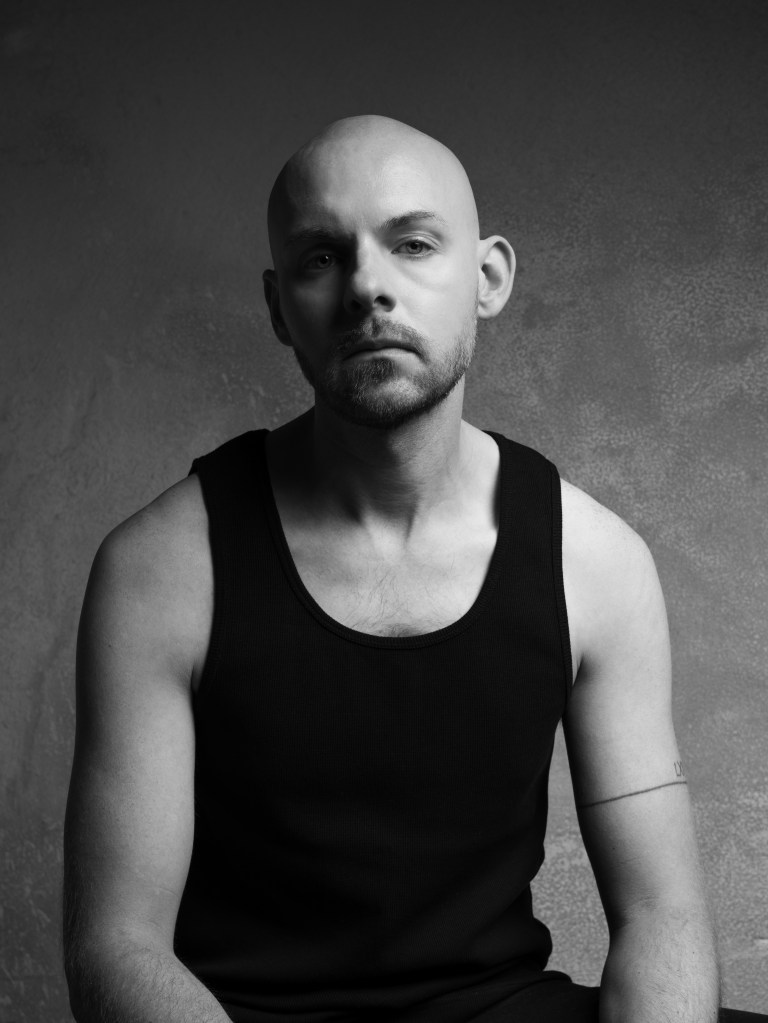
Jeremy is doing a launch for the book, in collaboration with Boys Boys Boys in London on the 20th May. But before the book presentation, he stopped by YASS HQ for an exclusive interview.
Three Days Grace feels deeply concerned with what families hide from each other. Why did you want to explore silence and secrecy through a queer lens?
Silence is one of the first languages many queer people learn. Not just what not to say, but how to listen for what’s missing. Families often function through omission as much as expression, and queerness sharpens your awareness of that. You grow up sensing fractures before you can name them. I wanted to explore how secrecy isn’t just protective, it can also be life-defining. Secrets shape how we love, how we trust, and even how we understand ourselves.
You’ve described the novel as a deeply personal work. How much of writing it felt like excavation — of memory, identity, or emotional truth?
Writing Three Days Grace often felt more like digging than it did writing. It took me five years, off and on, to finish the manuscript, so sometimes this digging was happening against my own resistance. Not because I was recounting events, but because I was getting closer to emotional truths I had avoided or softened over time. There’s a moment in writing where you realise you can either stay at the surface or go somewhere more dangerous. This book required choosing the latter, again and again. That doesn’t mean it’s a purely autobiographical work, but there was an element of putting myself as a queer person who has experienced what messed-up family dynamics and secrets look like into the story.
So many queer stories are framed around desire or disclosure, but this novel seems equally interested in inheritance, damage, and survival. Was it important to you to tell a queer story that sits in that more psychologically complex space?
Desire and disclosure are often treated as the climax of queer stories, as if once you’ve named yourself or loved openly, the story resolves. That’s never felt true to me, at least not for very long. What interests me is what comes after, what people are left holding. The damage we inherit, the patterns we repeat, the ways survival reshapes us. I wanted to write a queer story that isn’t about becoming visible, but about what visibility doesn’t fix. I also didn’t want to write a story that was a typical situational comedy or romance. Those stories have their place, but I wanted to go deeper than that.
The book asks what breaks us, what binds us, and what might still save us. Did you begin with those questions, or did they emerge through the characters?
The characters forced me toward asking certain questions. When characters are well written, they take on their own personalities, tell their own stories, and these characters kept circling the same emotional terrain, the same unresolved tensions, until the questions became unavoidable. What breaks us, what binds us, what might still save us—those aren’t abstract ideas in the book. They’re pressures the characters are living under, often without the language to articulate them.
Paris feels more than just a backdrop here — it has a claustrophobic, haunted quality. What did the city allow you to say about loneliness, performance, or reinvention?
In my experience, Paris can be a place where one can disappear elegantly. There’s so much emphasis on image, on performance, on being seen in a certain way, but that visibility can be incredibly thin. I am interested in that contradiction: how a city can make you feel both hyper-visible and completely alone. That contradiction is magnified when a person is an expat, literally a foreigner in a foreign land. This allowed me to explore loneliness that isn’t obvious, a kind of loneliness that hides behind beautiful clothes, a successful job, a beautiful flat.
The novel brings together characters carrying old wounds, resentments, and buried truths. Are you interested in the idea that queer lives are often shaped as much by what remains unspoken as by what gets declared?
Yes, and I think what changes is not the presence of silence, but its texture. Before coming out, silence is often imposed. It’s external or structural, something you inherit without choosing. It lives in the family, in language, in what’s permitted or not permitted to exist. But after coming out, silence becomes more intimate, more internalised. It’s no longer just about what you’re not allowed to say, it’s about what you can’t quite bring yourself to say, even when you technically could.
There are conversations that remain impossible, not because they’re forbidden, but because they would require a kind of emotional exposure that feels too risky. You learn to edit yourself in more subtle ways. To protect others, sometimes. To protect yourself, often. And over time, that restraint becomes habitual, shaping how you relate, how you love, and how close you allow others to get.
I’m interested in those second-order silences that exist within relationships that are, on the surface, open or functional. The things we don’t say to our parents because it would destabilise a fragile peace. The things we don’t say to our partners because we’re afraid of what they would reveal about us. The things we don’t say to ourselves because they would force a kind of reckoning we’re not ready for.
In Three Days Grace, those unspoken elements are active forces. They create distance, they distort memory, and they reorganise relationships. And sometimes they carry more emotional truth than anything that is explicitly declared. Because what we refuse to say often reveals where the real tension lies.
There’s something powerful in the title Three Days Grace — it suggests mercy, but also a deadline. What does “grace” mean to you in the context of this story?
Initially, I challenged myself to write a book which took place in a constrained amount of time. Many of the books I read and love are epic in nature, taking place over several months or even years. So, three days was an interesting amount of time in which to restrain the narrative. It’s enough time for things to happen, for decisions to be made, but it’s not enough time for the luxury of choice. Grace, for me, is the possibility of being met—by another person, or by yourself—with a kind of mercy you haven’t necessarily earned. But it’s also fleeting. The “three days” suggests that grace has a limit, that there’s a window in which something can be repaired or understood. After that, it might be too late. So grace becomes something urgent, almost fragile, and it’s also something you can miss if you aren’t careful.
As a queer writer, do you feel any tension between writing for yourself and writing into a wider cultural conversation about what queer narratives should look like?
I’m wary of writing toward expectation, especially around what queer stories are supposed to offer. That being said, there’s often a pressure in queer literature toward coherence or redemption in your traditional coming-of-age stories or toward clarity or resolution in your more erotic-type of fiction. But real lives are messier than that. I think my responsibility is to stay close to what feels true, even if that truth is uncomfortable or unresolved. So if there’s tension, it’s probably a useful one.
Your work is described as psychologically raw but also lyrical. How do you approach writing emotional pain without flattening it or making it feel overly neat?
In that same vein, I think there’s a real temptation, especially when writing about pain, to move too quickly toward meaning. Some narratives try to translate pain into something coherent, something that can be understood or even redeemed. However, I find that often flattens experience. In life, pain is rarely tidy. It lingers, it mutates, it resists explanation. I try to let pain remain unresolved on the page, and to give pain space to exist without immediately asking it to justify itself.
What interests me most are the moments where people fracture: where their intentions and their actions don’t align. Someone can love deeply and still cause harm. They can know exactly what needs to be said and still choose silence. Those contradictions feel more honest to me than any clean arc of growth or resolution. They reveal something uncomfortable about being human, which is that we’re not always legible, even to ourselves.
The risk with lyrical writing is that it can aestheticise pain, make it feel distant or even beautiful in a way that softens its impact. I try to be very aware of that tension. I want the language to carry a certain precision, even a kind of quiet beauty, but never at the expense of emotional truth. If a sentence is too polished, too self-aware, it can start to feel like it’s performing the pain rather than inhabiting it. So the challenge is to let the language hold the weight without resolving it. In other words: to stay close to the discomfort, to the incompleteness. That’s often where the real emotional charge is: not in what’s understood, but in what remains unresolved, contradictory, and just slightly out of reach.
Queer readers are often hungry for stories that are honest, layered, and unresolved. What kind of emotional afterlife did you want this book to leave behind?
I want Three Days Grace to stay with the reader in a slightly unsettling way. Not as a clear message, but as a feeling that lingers as something, perhaps, unresolved. Ideally, the book doesn’t close anything; it opens something. A recognition, maybe. Or a question the reader can’t quite shake about their own silences, their own relationships, or their own capacity for grace.

