East London’s legendary performance artist and cabaret trailblazer Jonny Woo is back where he belongs. Following a critically acclaimed, sell-out run and a decorated season at the Edinburgh Fringe, Woo brings his brilliant autobiographical masterpiece, Suburbia: Re-Loaded, back to Soho Theatre this July 2026. Stripping away the protective layer of grand characters to expose the raw, unfiltered journey of his own life, this iteration hits harder, deeper, and with significantly more dresses.
We sat down with the icon to discuss intimacy, the rich darkness of real cabaret, and coming home to his performance roots.
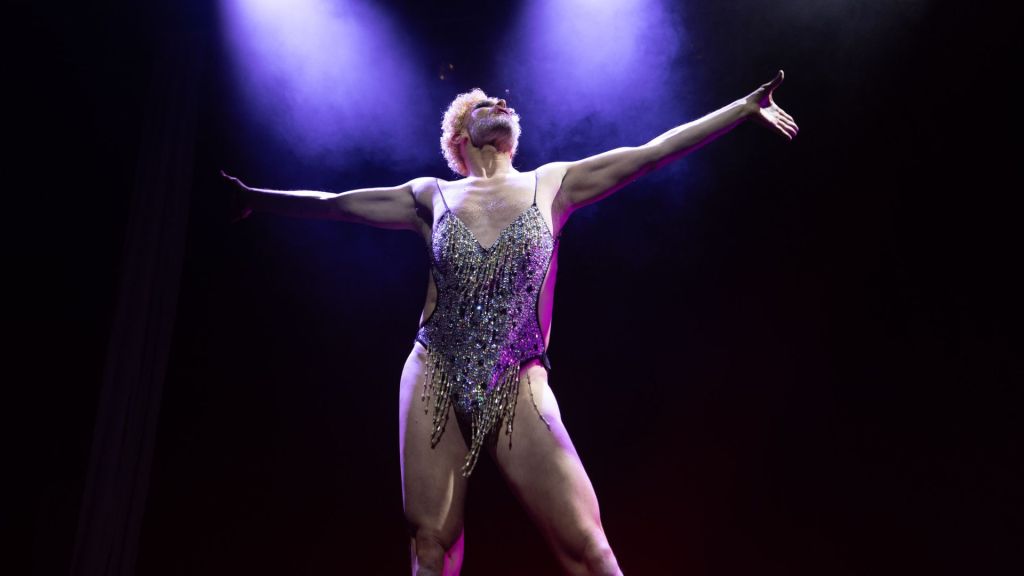
You’ve called this your “most personal show to date.” What felt different about opening up your actual life story—from Medway to Manhattan—compared to the larger-than-life characters and drag personas you usually present?
Ohhh I like ‘Medway to Manhattan’. My solo shows always have been prersonla stories or reflections. I started out in NYC in 2000 with my pal Brandon Olson making performance art pieces based on our lives as young gay men in NYC. One of the original pieces features in the show. So really it’s not so much a departure, rather a coming home to my original style of making work. It’s been 10 years since I’ve made work like this; in the past 10 years I’ve made some group theatre pieces or been making variety shows and hosting; so actually this is essentially WOO.
Suburbia was a massive success at Edinburgh Fringe and in its first Soho run. What does “Re-Loaded” bring to the table? How do the new choreography, revamped songs, and “greater intimacy” change the emotional landing of the show?
I felt like some more work could be done to hone the story. I’ve kept it within the ‘collage’ feel of the piece so the story telling remains loose and evocative and I allow the audience to make the connections rather than always saying –‘and then this happened’. So, it’s been tweaked and edited from Fringe and whilst touring. The space feels more intimate. It’s exciting to bring an intensity to the work and yes, I wanted to amp up the ‘poppers’ moment with a bit of choreography just to increase the momentum of the drug high. My pals who have seen it before saw new imagery and the experience is that it’s very different to how it was 2 years ago, but the words are the same – but there are far more dresses.
The show covers some heavy, raw territory—touching on substance use, mental health, and the darker realities of queer nightlife. How do you balance that vulnerability and darkness with the high-energy, sparkling joy of cabaret?
I don’t think cabaret is about ‘sparkling joy’ To me cabaret has been about rich darkness. It has an ‘unctious’ feel to it – and it always feels open-ended and evocative. So darker themes have always sat well within cabaret. It’s often confessional. It can be quiet and it can be provocative. It has direct address to the audience, which is very much my performance style. I don’t ‘fourth’ wall much. But of course cabaret breaks emotional flow; interrupts narrative; plays with form. And cabaret IS nighlife.
You trace a path from 90s London raves to 2000s New York sex clubs and drag bars. Looking back at those eras through a 2026 lens, what do you think modern queer culture has lost from those pre-social media, deeply underground spaces? And what have we gained?
Well it was all about the real-time connection and nothing would be recorded, it’s forgotten, left to memory. Sex clubs and stuff still exist very much like that. You see clubs now wanting to pop stickers over your phone – like risky stuff might happen. No shit! Clubs are for taking illegal drugs. Period! Lets not pretend it’s just about the music. It’s a combination of the lot. For shagging. Sweating. Falling apart. Being seen on social media – well we all now know what kind of disease that’s turned into. Clubs used to be permissive spaces; unregulated. I think the queer scene is refinding that and I like to see that tbh. I’m a little bit older now so I only make appearances in London’s clubs ever ynow and again lol. But you know what – going out is essentially the same. Go out – get smashed – dance – snog – come home – eventually.
New York in the 2000s was a legendary time for performance art. How did that gritty, boundary-pushing American scene shape the “Jonny Woo” that ultimately returned to redefine East London drag
Ok lets be specific. In the early 2000’s on the lower East Side, women were forging ahead with a performance art burlesque scene which was punk, feminist and radical and queer performers performed in their spaces. I think this should be recognised as it was these women making a lot of the spaces. I worked with a pal, Brandon Olson, and we made work freely, without boundary or form or edit. Without censure. NYC taught me that no matter what discipline, drag, rap, story-telling, go-go – you are an artist. I hole that close to me still today. I’ve tried to harness that spirit with this show. This is my art. My style. My way of telling a story. I bought these ideas back to London in 2003. 2 clubs – The Cock on Ave A and Jackie 60. Both clubs completely informed the style of parties I threw in 2003 and onwards and I see how this became a blue-print for much of what is on the east-london scene today.
You’ve proven that queer cabaret isn’t just “nightlife”—it’s high-caliber theatre. How does it feel to have your autobiographical performance recognized in that way by the wider theatre establishment?
Soho Theatre is amazing, It’s London’s premiere venue for ground breaking theatre and cabaret and the unsung hero for queer performance. I’m honoured to have been working with them for 20 years. It’s amazing. I’m just grateful.
If 90s-rave-era Jonny could see you performing Suburbia: Re-Loaded at Soho Theatre today, what do you think he’d be most fascinated by?
That he managed to get his shit together and do that. 90’s rave Jonny lived for the weekend. It was pills and dacning and talking about pills and dancing. It was fabulous.
If you had to describe your drag and performance aesthetic in just three words, which would you choose?
Alt-Drag-Perf-Art. (Simone Baird from Time Out in 2005 used the phrase) It’s a mix of 4 longer words. But it works. That’s what you’re getting.
Who were your biggest queer icons or creative inspirations when you were first starting out?
Justin Vivian Bond. Lavinia Co-op. Margot Ledbetter (Penelope Keith). Wonder Woman. Man2Man Meets Man Parrish.
What does the word “community” mean to you in 2026? How do you see your role in keeping the queer community connected?
Community evolves and is different things to different people. It doesn’t have to be the same thing for everyone. I have my immeditate queer community of people I’ve been going out with for decades and people I’ve worked with across the years – choosen family; the extended community of people who’s work I respect or ethos I admire; the global queer community of feeling connected to like-minded people who are making strides in making the world a better place or creating amazing art which discusses and challenges the world in which we live. My role now? I make shows. I like to invite queer artists to be part of my spectacles. I look after my younger queers. Baby I’m in my 50’s. I’m starting to look after me a bit more. I used to want to be at the center of it all. Now I’m happy doing my thing and helping out people I like along the way. The Divine is still there and is a nucleus for many new queer communities. In a way – my work is done – but not quite – not yet.

