Wedding season is officially upon us, and while the champagne flows and the dance floors heat up, anyone who has ever sat at the “rambunctious and increasingly unhinged ‘queer table'” knows that weddings bring out the absolute best, worst, and most chaotic in people.
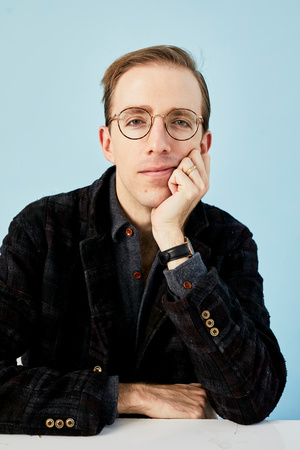
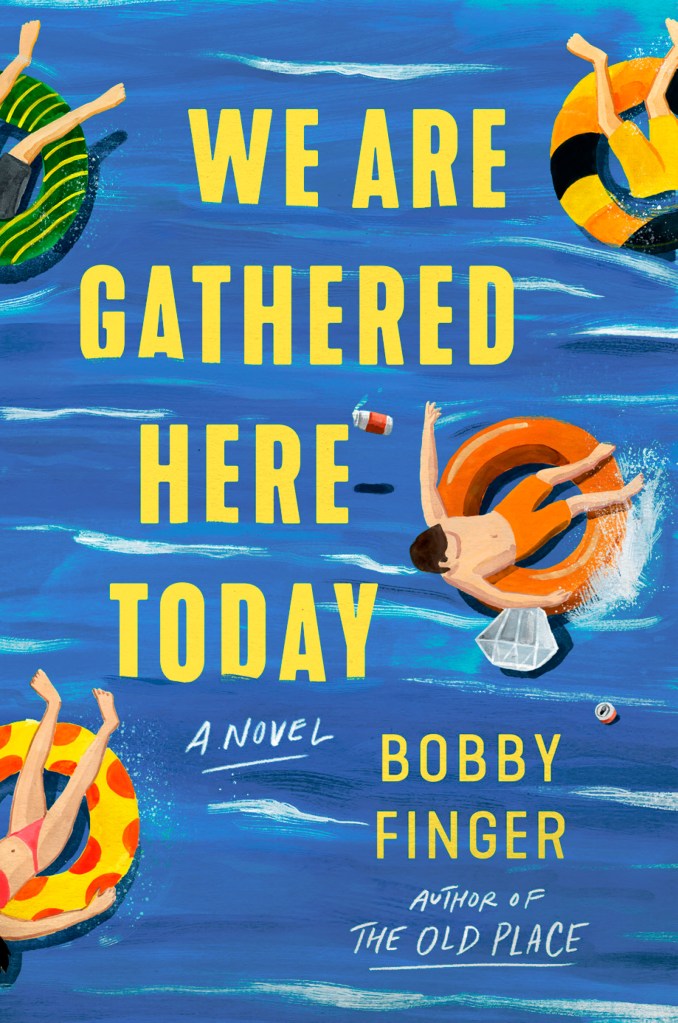
Enter Bobby Finger. The host of the wildly popular Who? Weekly podcast and critically acclaimed author of The Old Place and Four Squares is back with his highly anticipated third novel, We Are Gathered Here Today (Putnam; On-sale: June 16, 2026). Set over the course of a sweltering, kitschy, Wild West-themed Texas wedding weekend, the book follows 36-year-old Finlay Hightower. Finlay is officiating his beloved cousin Elaine’s wedding while harboring a massive secret: he’s secretly engaged to the man of his dreams, but the impending nuptials have sent him into a spiral of existential dread about the institution of marriage itself.
To survive the matrimonial madness, Finlay and his tight-knit crew rely on “The Hour of Disrespect”—a sacred pact to hold back all petty, hilarious critiques until exactly sixty minutes after the ceremony to protect the wedding glow.
YAAS Magazine sat down with Bobby Finger to talk about the politics of gay marriage, normalizing non-traditional relationships, and why Texas queers are unmatched.
Q: In your author’s note, you pose a brilliant question: Is participating in marriage an act of protest or mere assimilation for queer people? How does Finlay’s internal tug-of-war over his own engagement reflect the broader community’s journey from fighting for legal recognition to actually deciding what marriage means on our own terms?
Bobby Finger: I think that question is one that drives a lot of queer people mulling the idea of marriage (myself included) totally crazy. Over the course of the novel, I wanted him to transition from someone who allows himself to be distracted by those types of larger questions—anything to keep him from engaging in actual self-reflection—to someone who, at long last, allows himself to be honest about what he actually wants. Yeah, queer people rightfully have complicated feelings about marriage, but at some point Fin needs to confront how he really feels instead of just spending a lifetime mulling it over.
Q: You made an excellent point that queer people have been at the forefront of normalizing non-traditional marriages, which is actually making straight marriages healthier. How does the book show the ways the LGBTQ+ community strips away old, patriarchal scripts to build relationships based on genuine, customized partnership?
BF: I hope each of the analytical (and often meandering) conversations Fin has with his new and old friends throughout the weekend showcase that. The whole point of those scenes is to show how much anxious thought they put into their life choices as queer people—you don’t want to be hated, but you also don’t necessarily want to follow cultural “rules” that were never designed with you in mind.
Q: Finlay finds himself anchored at the “rambunctious and increasingly unhinged ‘queer table'” during a very traditional, kitschy Texas wedding. Why was it important to you to contrast the rigidity of mainstream wedding culture with the joyful, unfiltered energy of queer safe spaces?
BF: I wanted there to be a palpable tension among the queer characters from the start, which is why I knew the novel had to be set at a straight wedding. That they’re all joined together on account of their being the odd ducks both accelerates their getting to know each other and makes them extra defensive and on edge throughout the weekend. At a queer wedding with way more queer guests, I don’t think the five of them necessarily would have spent much time together. Here, they’re all each other had.
“At a queer wedding with way more queer guests, I don’t think the five of them necessarily would have spent much time together. Here, they’re all each other had.”
Q: Author Rasheed Newson mentioned that “no one writes about friendship between queer people with more depth.” In a world that often hyper-focuses on romantic pairings, We Are Gathered Here Today shines a massive light on platonic love. How does the bond between Finlay and his friends challenge the idea that a spouse should be a person’s entire world?
BF: I think the novel challenges that idea by showing how obviously irrational it is. Leave Fin and the other queer characters out of the conversation entirely, and you’ve still got two straight people choosing to get married in front of all their closest friends. Why bother sharing this moment with people who don’t matter to you?
Q: Weddings are notorious pressure cookers where biological family expectations and chosen queer family dynamics collide. What do you hope queer readers take away from how Finlay navigates loving his cousin Elaine while staying anchored to his community?
BF: If this novel is about any one thing, it’s about how every marriage is different, and comparing one to the other is a misguided, unhelpful exercise. The only people who truly understand a marriage are the people who are in it. And the same can be said about familial relationships. Some family members deserve to be cut out of one’s life. Some don’t.
In Fin’s case, his cousin Elaine is a true friend who has always been there for him. What I’m saying is, I hope they take away that every relationship is unique. For this particular protagonist, making space for family was essential. That doesn’t mean it’s right for them!
Q: There is so much “queer trauma” in media, but your work is consistently praised for bringing “tenderness without cruelty” and “raucous humor.” How do you view the act of writing messy, deeply funny, and ultimately joyful queer stories as a form of celebration?
BF: The very fact that I have had the privilege to write three queer novels makes me feel like celebrating every time I think about it, so that feeling will always be in the back of my head while writing. As dark as the stories may get, ultimately… wow, it’s a story I got to tell. Also, as a reader, I seek out queer books that leave me feeling a wistful hope. I guess it’s not surprising that those are the ones I want to write, too.
Q: A sweltering, Wild West-themed Texas destination wedding is an inspired, chaotic setting. Texas has a complex place in the queer imagination—it’s a state with rich LGBTQ+ communities but also hostile politics. What drew you to putting this specific queer cast right in the heart of Texas summer heat?
BF: There was originally a chapter during which some of the queer characters are convinced they’re being harassed by a couple of homophobes in a pickup truck. It’s a dark, tense moment that ends with a bit of a laugh—it was all a misunderstanding!—so my editor smartly suggested I cut it. I think it was a little too on the nose for a novel that largely exists in an anxious kind of gray area. It’s a book about someone worrying about, planning for, and trying to avoid moments like that chase, not the chase itself.
But yes, it’s Texas, which is not the most accepting place for queer people, but it was important to me to highlight that, look, queer people live there, and have lived there for generations. They find a way to survive. To me, a hopeful message like that is more interesting than, “Oh, must it be so tough for all the Texas queers?” Texas queers are amazing!!! As for the heat, I just wanted an excuse to get them floating on that river.
Q: “The Hour of Disrespect”—holding back all the petty, hilarious critiques until exactly sixty minutes after the ceremony—feels deeply coded in how queer friends protect each other’s peace while still indulging in a bit of essential gossip. Where did this concept come from, and why is it a vital survival tool for wedding season?
BF: The Hour of Disrespect was an activity I created with a group of friends many, many years ago, at a wedding we all attended together. The couple who got married did nothing wrong at all, but the event itself was a bit of a disaster, and we all returned from it a little worse for wear.
To prevent us from going scorched earth and being total assholes, I suggested we complain for exactly one hour, after which we’d simply enjoy our long weekend together. The Hour of Disrespect is really just a way of siloing bad vibes so that they don’t get in the way of a good time. Having said that, yes, sometimes gossiping is the good time. As long as you stop before it gets toxic…
We Are Gathered Here Today hits shelves on June 16, 2026. Grab your copy via Putnam or request it on NetGalley now!

