This spring, Les Ballets Trockadero de Monte Carlo, make a much-anticipated return to Ireland and the UK for a 14-venue tour presented by Dance Consortium. The Trocks, fresh from celebrating their 50th anniversary, are still delighting audiences around the world with their hilarious parodies of classical ballet – performed with impeccable technique and fabulous comic timing.

The Trocks’ love of Classical and Romantic ballet is at the heart of what they do. Their perfectly judged blend of satire, subversion and slapstick is rooted in deep knowledge and respect for the original repertoire. In the UK and Ireland, they are presenting two different programmes – one on tour and one in London – spanning both ballet and contemporary dance.
On tour, the repertoire is Swan Lake; Pas de Deux or modern work or solo to be announced; Pas d’Action from La Bayadere (UK Premiere) or Metal Garden (UK Premiere); Dying Swan; Walpurgisnacht. At the Peacock Theatre, London the repertoire is Swan Lake;Pas de Deux or modern work or solo to be announced; Metal Garden (UK premiere); Dying Swan; Paquita https://trockadero.org/company/repertory/

14 of the company’s extraordinary dancers, hailing from Spain, Japan, Mexico, Cuba, Italy and the US, will be taking on a kaleidoscope of roles performed by their male danseur and female ballerina alter egos.
The dancers are: Olga Supphozova and Yuri Smirnov (Robert Carter); Varvara Laptopova and Boris Dumbkopf (Takaomi Yoshino); Grunya Protazova & Marat Legupski (Salvador Sasot Sellart); Holly Dey-Abroad and Bruno Backpfeifengesicht (Felix Molinero del Paso); Colette Adae and Timur Legupski (Jake Speakman); Blagovesta Zlotmachinskaya and Mikhail Mudkin (Raydel Caceres); Gerd Törd and Pavel Törd (Matias Dominguez Escrig); Tatiana Youbetyabootskaya and Araf Legupski (Andrea Fabbri); Moussia Shebarkarova and Vyacheslau Legupski (Vincent Brewer); Minnie Van Driver and William Vanilla (Liam Hutt); Maya Thickenthighya and Roland Deaulin (Peter Gwiazda); Marina Plezegetovstageskaya and Jacques d’Aniels (Antonio Lopez); Vera Vidludik and Nicholas Khachafallenjar (A.J. David); Heidi Kleine and Polykarp Legupski (Harrison Broadbent). Biographies here: https://trockadero.org/company/dancers/
Founded in 1974 in the wake of the Stonewall Riots, The Trocks started life as a late-night act on the makeshift New York stage of an early LGBTQ+ organisation. They have always been trailblazers and inclusivity, gender fluidity and body positivity, once subversive now part of the mainstream, are a given for them. https://trockadero.org/about-us/the-trock-turn-50

Tory Dobrin, who joined the company as a dancer in 1980 and became artistic director in 1992, said: “Our tours to the UK are one of the highlights of our calendar. The enthusiasm and expertise of the audiences in Ireland and the UK is unmatched! We are very much looking forward to performing, especially these new works.”
When you joined the company in 1980, queer visibility looked very different. How has the role of the Trocks evolved as LGBTQ+ culture has shifted from underground to increasingly mainstream
When I joined Les Ballets Trockadero de Monte Carlo in 1980, gay visibility was still largely underground. The company itself grew out of that underground culture—performing in small venues, often for audiences that understood the humor as both a loving parody of classical ballet and a wink to queer sensibility. At the time, drag performance and openly gay expression in dance were not widely accepted in mainstream arts spaces. Being part of the Trocks felt a little subversive; we were celebrating both ballet tradition and queer theatricality in a way that wasn’t often seen on major stages.
Over the decades, as LGBTQ+ culture has moved from the margins toward greater visibility and acceptance, the role of the Trocks has evolved as well. Early on, part of our impact came from simply existing—an all-male troupe performing the great ballets en pointe, combining technical seriousness with camp humor. Today, audiences often come with a different context: many people are already familiar with drag culture, gender play in performance, and queer artistry. Because of that shift, the Trocks are sometimes seen less as a novelty and more as a respected company with its own artistic legacy.
At the same time, the core of what we do hasn’t really changed. We still approach ballet with deep respect for the technique and tradition while using parody to reveal its quirks and conventions. What has changed is the cultural conversation around us. In the 1980s, our performances quietly challenged ideas about gender in ballet. Now, they contribute to a broader and more open dialogue about gender expression, performance, and identity.
In a way, the Trocks have become a bridge between eras. We carry the spirit of a time when queer performance thrived in hidden or niche spaces, while also benefiting from—and contributing to—a world where LGBTQ+ artists can appear on major international stages and be celebrated for both their artistry and their identity.
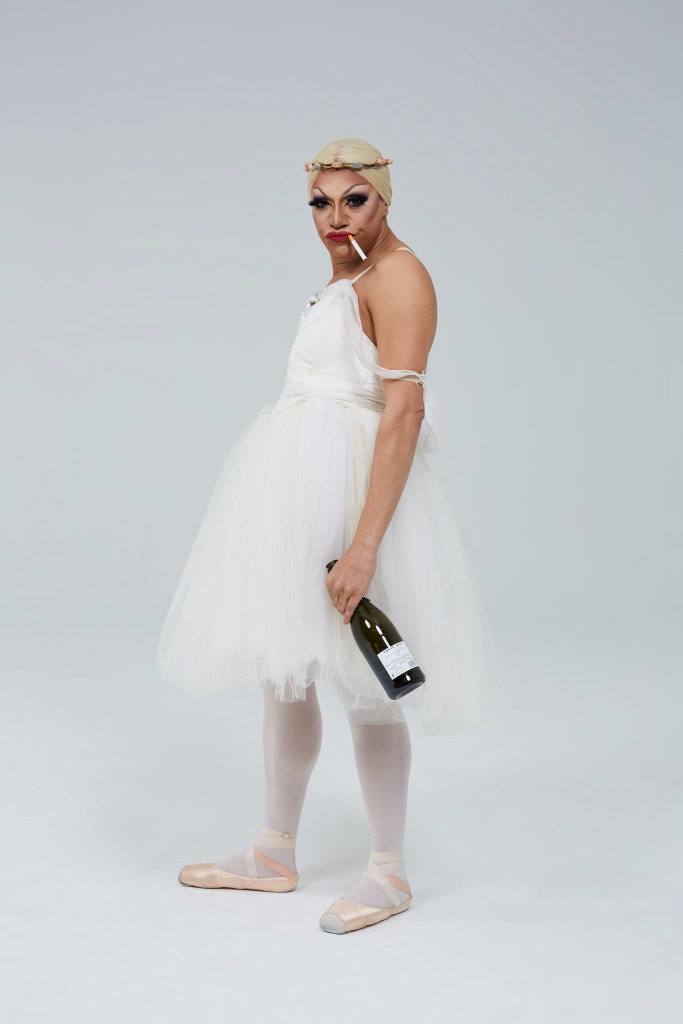
Do you ever reflect on the fact that what was once radical — men in pointe shoes performing as ballerinas — is now embraced by audiences of all ages and backgrounds?
Yes — and it’s actually a fascinating example of how art constantly redefines what audiences consider “normal.” 🩰
For a long time in the history of Ballet, gender roles were extremely rigid. Pointe work was considered exclusively the domain of women, with male dancers were expected to focus on lifts, jumps, and partnering. Because of that tradition, the idea of men performing en pointe and portraying ballerinas once seemed shocking or comedic to many audiences.
Over the decades, a few things changed: One is that audiences became more open to witness gender experimentation in the arts
In catapulting us to the mainstream- is that context shifted from parody to artistry: what started partly as satire has evolved into serious artistic exploration. Many contemporary choreographers now cast dancers regardless of gender for roles that once had strict boundaries.
Ballet audiences have broadened as well, and something that once felt radical now feels joyful, playful, and even inspiring to many viewers. 🎭 It’s a reminder that the performing arts are living traditions — they evolve as society evolves.
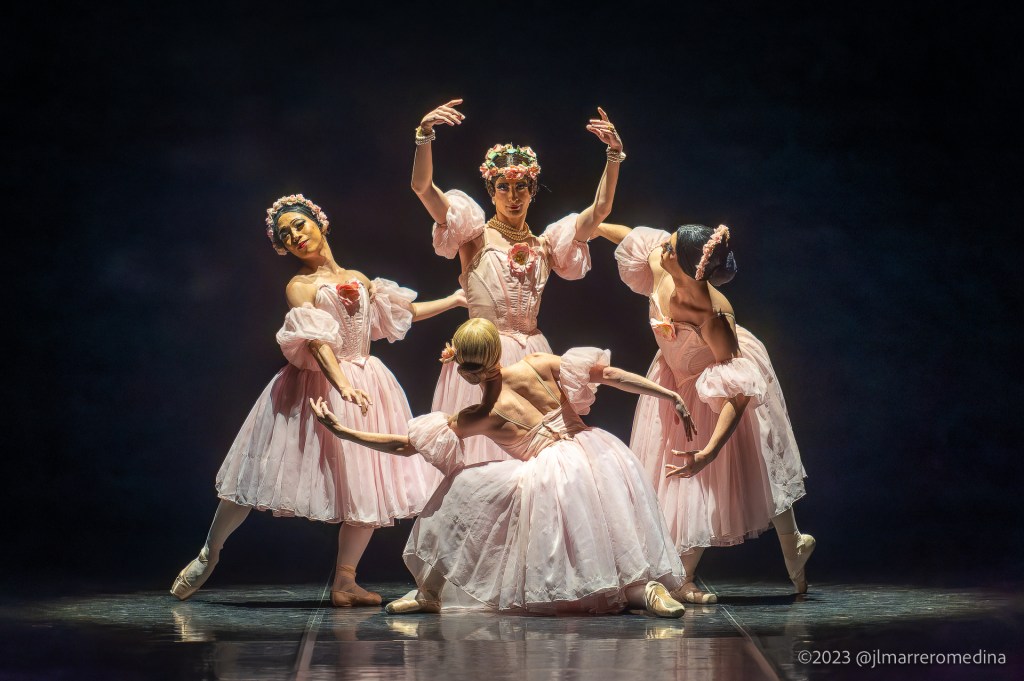
The comedy is razor sharp, but so is the technique. How important is it that audiences first see extraordinary ballet before they see the performance?
It’s extremely important. In works where comedy is built on top of ballet technique (like parody ballets or comic ballets), the audience recognizes what “excellent ballet” looks like. That context of how it should first look when performed “in a serious manner” is what makes the comedy land.
When you see that the company is comprised of highly accomplished professionals, and they notice that immediately, then you can recognize that the comedy is intentional and sophisticated, not just ‘sloppy dancing’.
At the same time, the comedy aspect makes a person relax and breaks a barrier on what can otherwise be considered an elitist art form.

You’ve said UK audiences are among the most enthusiastic and knowledgeable. What makes them special?
UK audiences understand the marriage of comedy and classical expression more so than any other audience that we encounter on tour. The Panto tradition develops an appreciation for laughter in the context of “high art” that prepares the average UK theatre goer for a show like The Trocks.
 YASS Magazine