You’ve photographed some well-known names—what’s the story behind your journey into the art and photography world?
I started very early, around the age of 10, picking up a camera and filming or photographing friends and family. I was already drawn to people , I also started Photography as a way to express myself, Photography quickly became a key to work in all different types of world.
I studied in Paris and New York at ESRA, and my early professional experiences included humanitarian work in Cameroun, Africa. Eventually, I moved to London, where I spent more than eight years working in the cinema industry. I had the opportunity to collaborate with major studios such as Netflix, Amazon Prime, Apple TV and Warner Bros, working closely with actors like Emma Mackey, Naomi Watts, Jennifer Saunders, Stephen Fry, Adèle Exarchopoulos, among many others.
Working as a Set Photographer, Portrait Photographer and EPK shooter (behind the scenes) taught me a great deal technically.
It also taught me how to read people quickly, how to work under a lot of pressure, and how to capture something meaningful in very limited time.
After cinema, I became a Photojournalist and Video journalist at sea with Sea Shepherd, documenting campaigns against illegal fishing. That experience stripped photography and videography back to its essence: observation, responsibility, and truth. Today, all these paths meet in my personal work a mix of cinematic awareness, documentary instinct, and an ongoing interest in intimacy.
What first drew you toward erotic and kinky imagery as a creative language?
I was never consciously “drawn” toward erotic or kinky imagery. I simply always had a camera with me and photographed the people and environments I was moving through.
That included friends, lovers, behind-the-scenes moments on large productions with kinky or provocative sets, as well as smaller underground projects. In London, I worked on sets for directors like Kassandra Powell, an incredible Greek director based there, whose productions were always surrounded by bold, radical creative energy.
At some point, I met someone who became a close friend , without initially knowing that he was a master with his own Playspace in London. Through friendship and trust, he gradually opened the doors of his world to me. I didn’t enter it to create fantasies or provocation; I tried to document it, to understand it.
With his help, I was able to explore all aspects of that universe, the structure, the rituals, the mindset, the ethics, the emotional intelligence behind it. The project came from that process of observation and learning. The erotic dimension is present, but it comes from reality, not from performance for the camera.
Is there a moment or shoot in your career that completely transformed how you see your work?
In the cinema industry. Even if it’s not the most sustainable environment, it’s a world filled with highly creative and technical people. I was always fascinated by how a relatively small group can achieve something so complex, so efficiently.
That said, what resonates most with me today is working for humanitarian or environmental organisations. Being able to use photography and videography to raise awareness, to support a cause, and to have a positive impact feels more meaningful.
Projects with organisations like Sea Shepherd reminded me that images can carry responsibility and that storytelling can be a form of action.
Your images feel both intimate and cinematic—what’s the emotional core you’re trying to capture?
It always depends on the context in which the images are taken.
On large film sets, I’m interested in people in action rather than posing, moments between takes, rehearsals, quiet concentration on beautifully constructed sets. I also love the posing moment with main actors for special shoots.
In everyday life, photography becomes a way of memorising happiness. You capture a moment without thinking too much about it, and later you can return to it whenever you need to feel it again.
When I work with models like King Vincene, who is also a close friend, the process becomes collaborative. He poses, I react creatively, and we build something together. At the core, it’s always about connection.
What’s the kinkiest shoot you’ve ever directed, and what made it unforgettable?
One moment that stands out involved a shibari performance where a body was suspended and structured with extreme precision. It felt closer to art installation, a beautiful collaboration.
It was a shoot for Kassandra Powell. She has an incredible ability to bring together diverse creatives in London, and the energy on sets are very powerful. That experience showed me how kink can exist as performance and art, rather than as something purely sexual.
When you photograph someone in a vulnerable or dominant role, what power dynamics are you consciously playing with?
Trust is the real power dynamic.
How do you push boundaries without losing authenticity—or going into pure shock value?
By not chasing boundaries at all. If something feels real, grounded, and consensual, it doesn’t need exaggeration.
I was guided into that world by someone who opened every door for me with respect and trust. I followed that rhythm rather than imposing my own.
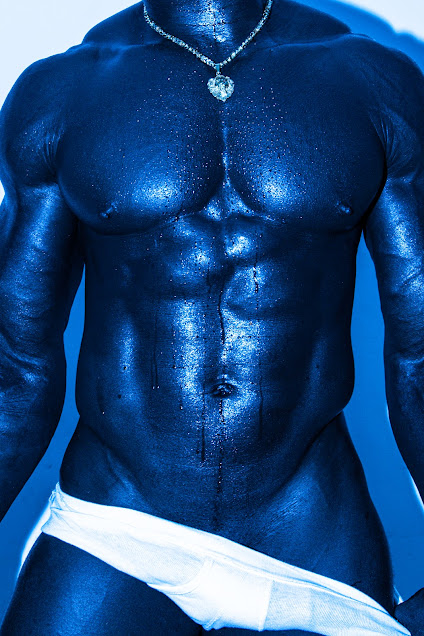
What do you think queer erotic art should dare to show that mainstream culture still avoids?
I think it should be more inclusive.
Men, women, trans bodies — all of it.
Even within our own communities, there are so many codes: how to dress, what can be seen, where it can be shown. Queer erotic art should question rather than reproduce the place it’s seen in.
Having worked with high-profile personalities, what have those collaborations taught you about desire, ego, and trust?
That high-profile celebrities are, at their core, regular people.
Big egos exist everywhere.
Visibility doesn’t erase vulnerability. Whether someone is famous or anonymous, the same things matter in front of a camera: respect, time, and trust. That’s true on a film set and in a playspace.
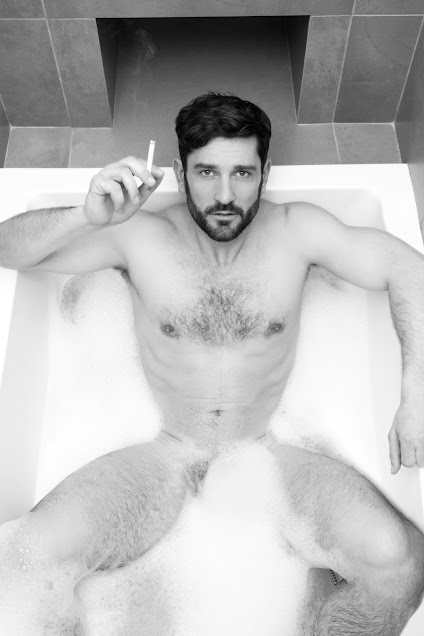
If you could reveal one thing about yourself through this series that viewers might not expect, what would it be?
That this work isn’t about provocation.
It’s about listening, observing, and allowing intimacy to exist.
 YASS Magazine