Glamrou – aka Amrou Al-Kadhi – returns to the Soho Theatre from 20th to 25th January for the first time in five years with their most autobiographical show to date; the key character of their award-winning memoir, LIFE AS A UNICORN (Harper Collins), this show finally explores the relationship with their Muslim mother on stage.
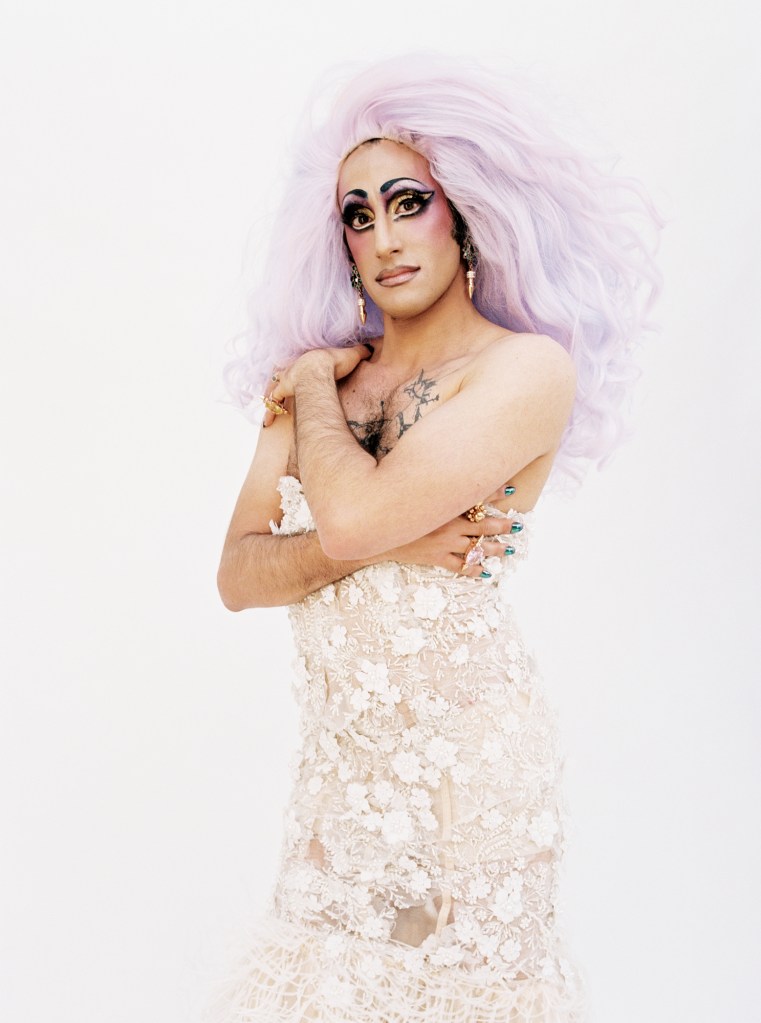
This tale of two mothers sees renowned Iraqi drag queen Glamrou face renowned Iraqi queen, Glamrou’s mother, after years of separation and savagery, fighting for the spotlight with their competing narratives of “WHAT REALLY HAPPENED,” and who suffered the most.
Amrou’s mother is the inspiration behind their drag persona, Glamrou – a way to honour the inherently camp femininity of their mother, preserving the bits of their mother they held so dear as a queer child. Raised with conservative beliefs, she often rejected Amrou for their queerness later in life; Glamrou became a way to liberate their mother from the shackles of conservative expectations.
This show sees Amrou finally become their mother, oscillating between Glamrou and mother – both in identical drag. Mirroring Amrou’s experiences, they confront each other onstage with Glamrou initially thinking that their mother’s severe reaction to their queerness was hatred, and then discovering that really, it was due to deep seated internal issues stemming from her strict religious upbringing. As Amrou wrote about in their book, when Amrou confronted their mother about why she hated them being a drag queen so much, she said: “it’s awful being a woman. I am so jealous that you were born a man…and you’ve wasted it dressing like a woman. I would kill to have the freedom that you have.” This show explores the pressures of Muslim womanhood and how it interacts with the freedom, femininity and complexities of a Muslim drag queen,
A comedy show that features live music, fresh trauma and live delusion, DRAG MOTHER will explore Glamrou and Glamrou’s mother’s resentment of one another, discover if a reconciliation between them is really possible and find out whether they can finally realise that they are the same queen in many ways! All whilst pointing fun at the long-seated cultural relationship between the gay community and cruel, camp woman. This show will make Glamrou’s mother the Disney villain / hero she was always destined to be.
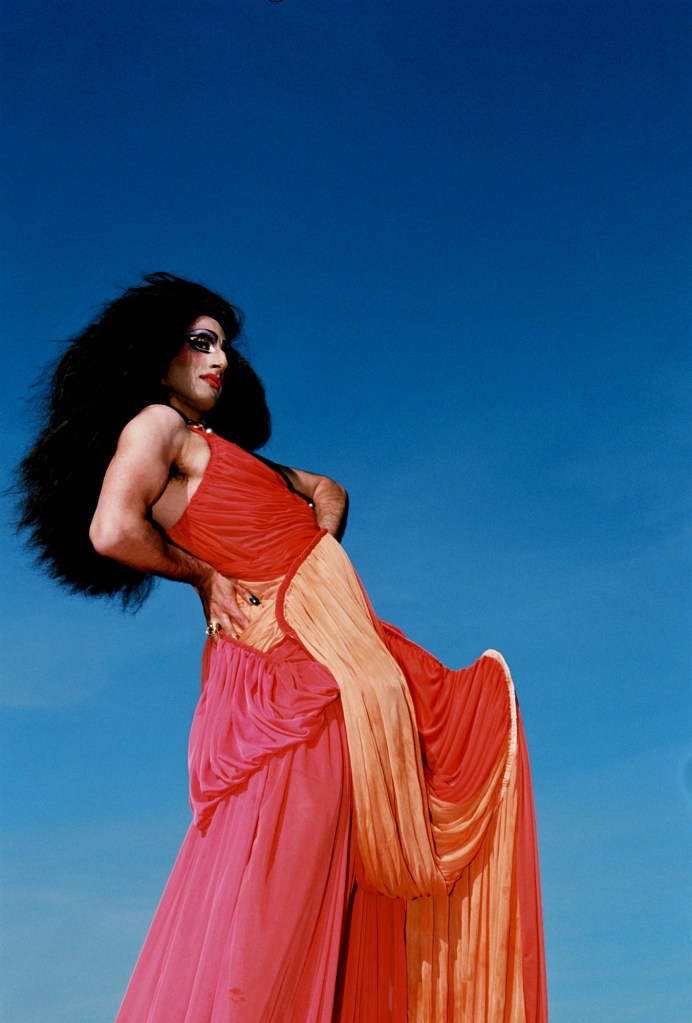
Last time you appeared in Soho Theatre was five years ago. How have you changed since that time?
I suppose I’m always changing as an artist – that was my first solo show back then, and so I was in this place of wanting to just spill my guts in quite an unfiltered way. Since then, I’ve been thinking a lot more about narratives, and the ways in which the very act of storytelling is performance in itself, and with this show, I am consciously playing with narrative in order to confuse / unsettle / activate the audiences into their own preconceptions about Islam, Arab identity, queerness, and making the very framing of the story part of the performance. I’m a lot more interested in contradiction these days, and in the fact that there are no victims or villains when it comes to when people act out of their emotions (however awful or inexcusable some behaviour might be) – so this show is all about me exploring my mother’s perspective on me as a drag queen, and how that offends her, and wanting to explore the justification for her behaviour – maybe even celebrate it. I’m in a place creatively where I’m very interested in moral ambiguity, and that’s been the creative direction of all my work recently.
Is this the most autobiographical show to date? What shall we expect from the show?
I don’t want to say TOO much, but in a way it’s the most emotionally raw, because it’s the most self-critical. I look at how I’m an asshole haha. The show is about my mother too; she is the inspiration behind my drag, and she is the source of a lot of my trauma, but also the greatest love of my life. I am going to play her (well Glamrou is), as well as Glamrou (who looks like her), in this drag hall of mirrors, and I going to embody both characters as they fight to tell their version of the story, and in doing so, exaggerating narratives, telling lies, and trying to win and manipulate audience sympathy…so it’s as much about what happened to me and my mother, but also how audiences respond to those stories and how it ties in with their own preconceptions. But the show is also about the gay relationship to womanhood, especially cruel or camp womanhood, and the relationship between drag femininity and womanhood, and the war that sometimes happens between them. I’m always fascinated by the way that gay men seem to exalt women who are a “hot mess,” even abusive – see gay icon Miss Trunchball – and this show will borrow the language of that.
How has your mother influenced your drag persona and what does she mean to you?
My mother is the campest, most fashionable and extravagant person I know – a truly stylish gay icon. And she’s also a very conservative Arab woman. And so my drag is like a queer embodiment of the bits of my mother that helped me access my queer identity growing up (even though she really tried to stamp it out and did everything she could to stop me being who I am). And so as Glamrou, I am sort of my mother, but freed from the conservative expectations placed on her as a Muslim woman growing up in Iraq – it’s my love letter to her, a way to sort of break ancestral chains. My mother has brought me so much joy and pain in the same breath, and this show embodies that contradiction, the fact that even though she destroyed me, she also saved me. As I say, I’m fascinated by contradiction at the moment!
How has the relationship with your mother changed over the years?
I don’t want to give too much away. But my understanding of her behaviour has shifted. When I was younger, I used to think she was just homophobic. But she isn’t. She was just worried about what would happen to me, and how the community would respond – maybe she was even trying to protect me. She once said to me that she wished she could have been a man, because of how hard it is to be a woman, and all the expectations placed on her. She expressed deep jealousy at the freedom I have; I think the fact that I have a freedom in femininity through my drag, when for her it has often felt like a corset, is something I only understood later in life. So I suppose my understanding of her behaviour has shifted the most.
How does religion affect womanhood and how can it interact with the nature of a Muslim drag queen?
Big question! I don’t think I can give a full answer here as there are so many experiences here; Islam can be very liberating for some women, and constrictive for some. There’s a lot of Islamic feminism out there that people can read, it’s quite beautiful stuff. But what I can say is that some people interpret the Quran to mean that if a child goes to hell, then so does the mother. And obviously, by every measure, I am a sinner – so I think my mother felt that my being me was a failing of her Islamic duty, and that my behaviour was sending her to hell (and obvs she doesn’t wanna go!). In terms of Arab identity and womanhood, I do think my mother was under so much pressure to be beautiful, a good mother, a good wife – and it was kind of a constriction. And for me, femininity is a freedom. And so this show is looking at that tension, between femininity as duty / freedom. But my mother is also obsessed with femininity, and her make-up and sartorial outfits have been a huge source of power for her. It’s all so complicated!
How can resentment transform to acceptance and reconciliation? What have you learned from this journey?
As a writer for TV & Film, my job is to write characters with deep empathy, never seeing them as victims or villains, but just real, messy, emotionally contradictory people. And it’s been really healing to always believe people’s actions are from an emotionally real place, even if they are behaviours you disagree with. So I suppose I’m saying that I always try to explore people’s behaviours from their perspective, and that has been great for my writing, but also great for my healing – as it takes things outside of just yourself – and I think that’s what this show is about. And drag obviously allows me to celebrate my mother as a queer person (even though I was raised in a very tricky household)/
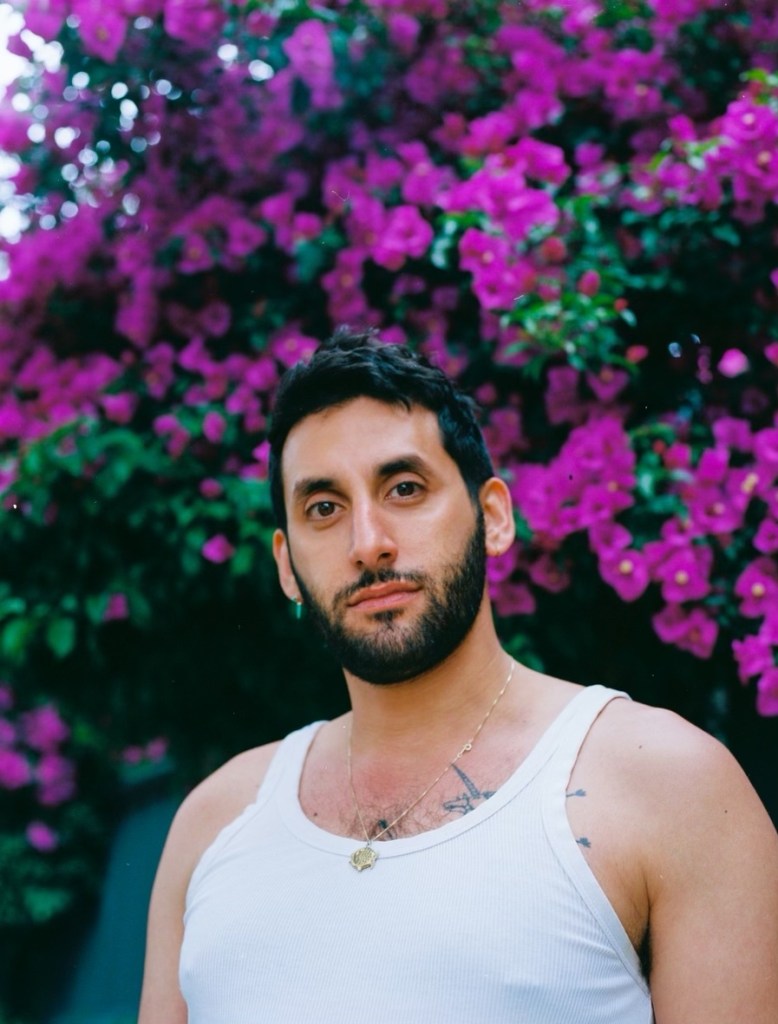
How has your style and drag persona evolved over the years?
I think when I started drag it was a rebellion against my Arab family, and so I was often dressing as white women, and rejecting my Arab heritage and my Muslim upbringing. As I’ve healed and made peace with things, reconnected with my family and have integrated with Arab and Muslim communities, I’ve accessed elements of my heritage, my culture and my faith that are so beautiful, and my drag has therefore allowed me to integrate with my heritage in a much more healing way.
You are a writer, filmmaker, and performer, whose work primarily focuses on queer identity, cultural representation, and racial politics. Your directorial debut feature film LAYLA premiered in competition at Sundance and was released in UK through Curzon on 22nd November, alongside a string of international sales in the US and throughout Europe. It received a 4-star review in The Observer, and rave reviews at Sundance. How do you feel about that?
Oh it’s been such a long journey, that by the time the film is released, I’ve already really moved past it and creatively processed the story. Like, we shot that film over 2 years ago, wrote it 6 years ago, and it’s only just been released. By the time it comes out, I’ve already creatively processed it and moved on – and can only really see the mistakes. So I see the film as a document of what younger Amrou felt, and it’s a time capsule. And I’m proud of it. I’m extremely hard on myself, and as a result, don’t often get a chance to just enjoy what I’ve done.
How do you identify and how would you describe yourself?
Non-binary British-Arab!
How is the LGBTQ+ scene in London now?
I don’t really know, I barely go out these days. But I think queer people all around the world are feeling scared at the moment, there’s a real fragility in the air – I think coming together and creating spaces, even if just make-shift, is sacred these days. Fascism is back (maybe it never went away). We really need to look after each other. I try and create those spaces for audiences in my shows.
Are you happy?
Erm…next question.
What are your New Year’s resolutions?
To be less self-punishing.
What are your future plans?
I just want to keep growing as an artist. Getting to make art for a living is such a miracle – especially these days – and I never want to waste the rare opportunities I get when they come my way. I’m really keen to make a TV show soon. I’d love to bring my writing and queer Arab characters to broad TV audiences. There’s such a dehumanisation of Arabs happening writing now, and it’s so scary – getting to humanise Arabs on television screens is so vital.
 YASS Magazine