The Ardennes, the Black Forest, Broceliande, the Vexin. Forests are spaces that can elude immediate understanding. Here, humans and animals scatter and hide, stalking, pursuing and trapping each other. Places of calm and meditation, of ecstasy and vivid life, forests can also be threatening and toxic environments.
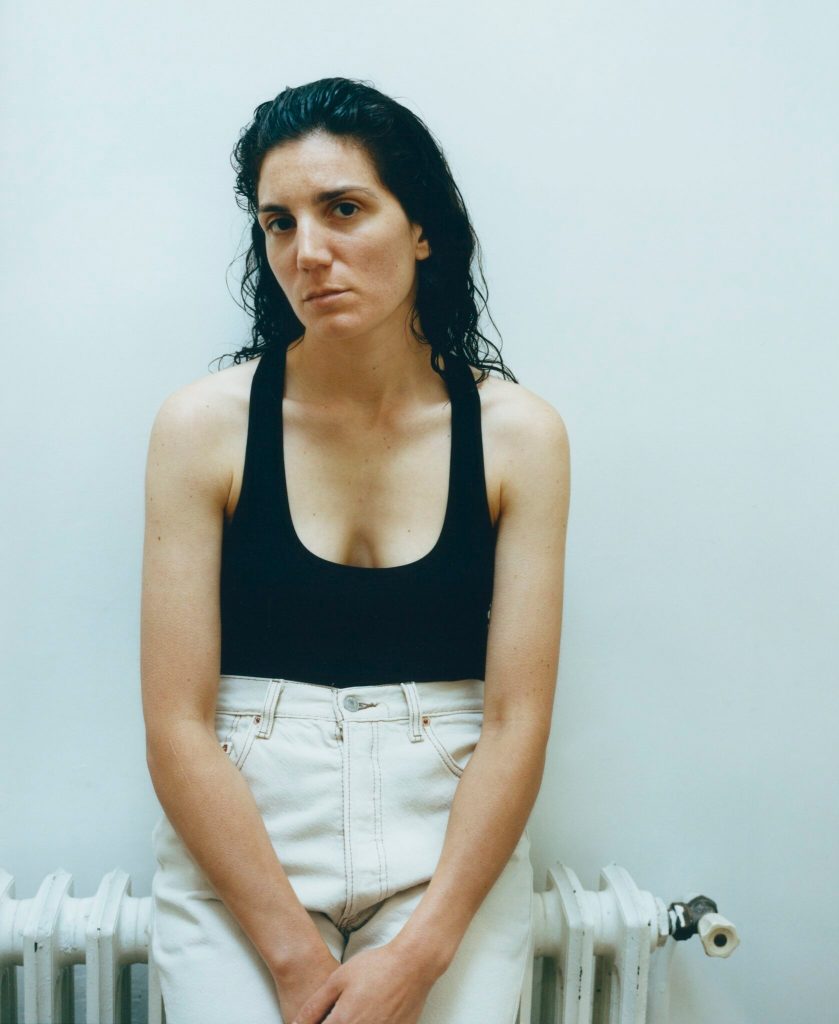
Photo by Maria Toultsa. Courtesy of the artist.
In Αγρίμι (Fauve), Lenio Kaklea meticulously choreographs a ‘rewilding of bodies’. Through on-stage exercises, dances and rituals, she explores the forest as a place – both physical and imaginary – for identities to dissolve and bodies to metamorphose. As the first performance that links Kaklea’s choreography to the geographical, environmental and poetic richness of the forests, Αγρίμι (Fauve) presents dance as another wild zone to be defended.
Αγρίμι (Fauve) is co-commissioned by Serpentine and Kunstenfestivaldesarts, Brussels; Athens Epidaurus Festival; Centre national de la danse Pantin; Festival d’Automne de Paris; Theater Spektakel Zürich; Pôle Sud – CDCN de Strasbourg; La Briqueterie – CDCN Val-de-Marne; ImPulsTanz International Festival; DanceWEB Life Long Burning Network; Le Dancing – CDCN de Dijon.
The UK premiere of Αγρίμι (Fauve) is presented by Serpentine in partnership with Sadler’s Wells.
The project is curated and produced by Kostas Stasinopoulos, Curator, Live Programmes, Serpentine and Holly Shuttleworth, Executive Producer, HS Studio, with Daisy Gould, Assistant Curator, Live Programmes, Serpentine, Isobel Peyton Jones, Production Coordinator, Serpentine, Andy Downie, Production Manager, Velocet, and Eva Speight, Curatorial Assistant, Live Programmes, Serpentine.

Photo by Maria Toultsa. Courtesy of the artist.
What can audiences expect from this performance?
A hybrid dance show that brings together intense choreographic scores and strong visual elements in the quest of a contemporary tale about forests, rituals and their potential power of transformation.
How have you evolved as a performer since you first started?
I started dancing at the age of ten at the National Conservatory of Contemporary Dance in Athens, Greece. Since then, I have danced a great variety of techniques and repertories. From The Diversion of Angels by Martha Graham, Musical Offering by Jose Limon, to collaborations with the minimalist choreographer Lucinda Childs or visual artist Alexandra Bachzetsis. In my personal choreographic work, I have dived in the work of composers such as John Cage, I was drawn to iconic pop choreographies such as Thriller or Hit me baby one more time, made work about zombies, feminist studies, or eco-criticism. What I’ve learned from these radically different experiences, is that movement is a situated event. More precisely, it means that we are surrounded by a diverse gestural landscape, and that our relationship to movement is an intimate space in which we construct our identities, regardless of whether we practice dance or attend dance shows. And this is what makes choreography such a meaningful art, today.
What are the areas you are exploring in Αγρίμι (Fauve)?
In Fauve, I took as my starting point the dramaturgical structure of iconic romantic ballets such as Gisele, in which the forest appears as a space of quest, hunting, fantasies and meetings with mythical creatures. Instead of working towards this romantic and mystifying representation of the natural world, I staged a rougher approach, where the encounter with the forest is a space of mutual transformation, characterized both by affection, violence and fear for the unknown.
This performance links your choreography to the geographical, environmental and poetic richness of the forests. How is dance presented?
Fauve is structured in two acts. In the first act, we borrowed elements from folk dances to create an intense choreographic score that stages performers dancing on the frontier to a forest. The second act moves the performers inside it. There, dance takes the form of a collective ritual of initiation, where the performers interact more closely with the idea of a forest that is not made to host or accommodate human presence.

How do you feel about the UK premiere of this show?
My first time in London was in 2015. Back then, I had collaborated in a curatorial project called What if Tate was a Dancing Museum?, organized by French choreographer Boris Charmatz. After that experience, I came back to present my autobiographical solo Ballad at the ICA in 2021. Today, I’m thrilled to be back with this Serpentine co-commission and present Fauve on one of my favourite stages in town: the Lilian Baylis Studio at Sadler’s Wells.
Are British audiences different from Greek ones?
My impression is that the last two decades were strongly shaped by the impact of globalization. When I was a young dancer, I participated in artistic productions that were challenging and formally innovative and had the chance to reach large audiences and travel around the world. This allowed for a certain “coming together” between what was produced in France and seen in London or made in Manchester and seen in Athens, Greece. The massive cuts in public funding and the lack of consistent cultural policy in most European countries for the live arts, today, puts extreme pressure on independent productions. As a result, mostly conventional shows get to reach large audiences. And this, unfortunately, is a reality that most artistic communities and audiences, regardless of local differences, are confronted with, both in Great Britain, France or Greece.
What are your future plans?
I just premiered Chemical Joy, a stage work for five dancers on the theme of “youth culture”. The piece is the result of my collaboration with the repertory company BODHI PROJECT founded by Susan Quinn, ex member of the Merce Cunningham company, and based in Salzburg. While Chemical Joy is on tour in Greece this summer, I’m now preparing a new production for seven dancers on the figure of The Birds which will premiere in France in June 2025.
https://www.sadlerswells.com/whats-on/serpentine-lenio-kaklea-fauve/
 YASS Magazine