In his formally inventive film, Paul B. Preciado abandons the conventional biopic format. Instead, he uses Virginia Woolf’s feminist fantasy novel ‘Orlando’ as a foundation to craft a vibrant collective biography that explores trans and non-binary lives.
Based on Virginia Woolf’s 1928 novel Orlando: A Biography, in which the protagonist changes sex in the middle of the story – Preciado sends a letter to Woolf in Orlando, My Political Biography. Blurring the lines between reality and fiction, the film reflects on how Woolf’s fictional character has transcended literature to become reality, exploring the transformation of Orlando’s body as a symbol that resonates with trans and non-binary individuals across the globe.
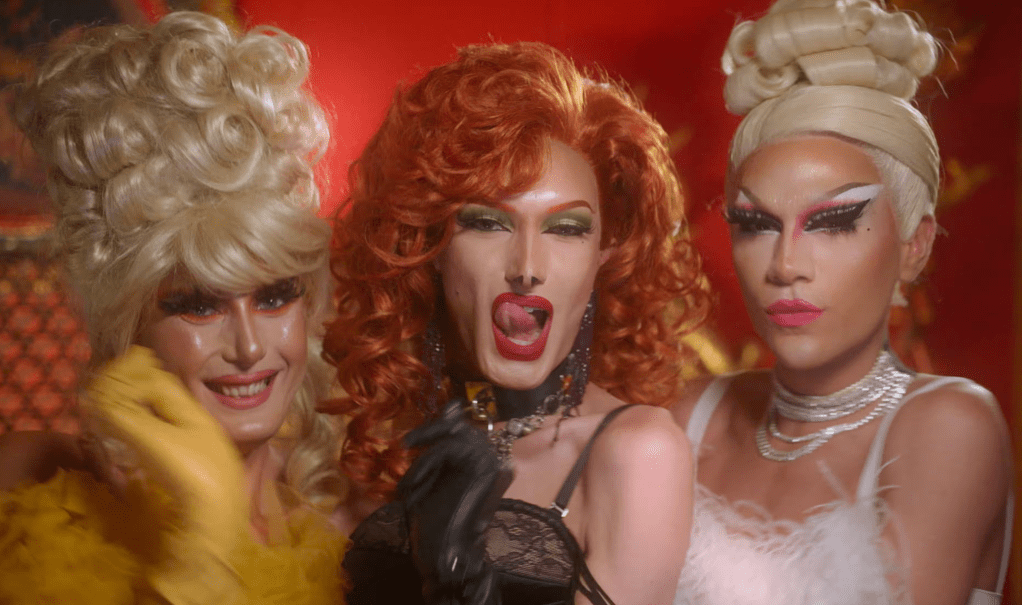
Winner of four prizes at the Berlinale in 2023, including Special Prize of the Jury for Best Documentary and the Teddy Award for best LGBT documentary. Preciado sums up the work as ’Every Orlando, is a transgender person who is risking his, her or their life on a daily basis as they find themselves forced to confront government laws, history and psychiatry, as well as traditional notions of the family and the power of multinational pharmaceutical companies.’
Paul B. Preciado’s film “Orlando, My Political Biography” begins as a letter to Virginia Woolf and evolves into a mix of autobiography, queer musical, period drama, and political manifesto. It offers a collective portrait of trans and non-binary individuals. Preciado, a Spanish philosopher and activist who has transitioned from being a lesbian to non-binary and now a trans man, weaves his life story into the film without making it the central focus. Instead, he combines personal experiences with philosophical reflections, reminiscent of his work in “Testo Junkie.”
A pivotal moment in the film is Preciado’s discovery that Woolf considered including herself in “Orlando” as a character. This film, much like a cunning fox, creatively blends literature, gender theory, colonial history, trans activism, and media, keeping the focus on its subjects. Initially approached by Arte to narrate his life for a documentary, Preciado decided to direct the film, transforming it from a traditional biopic into a collective trans biography inspired by Woolf’s novel.
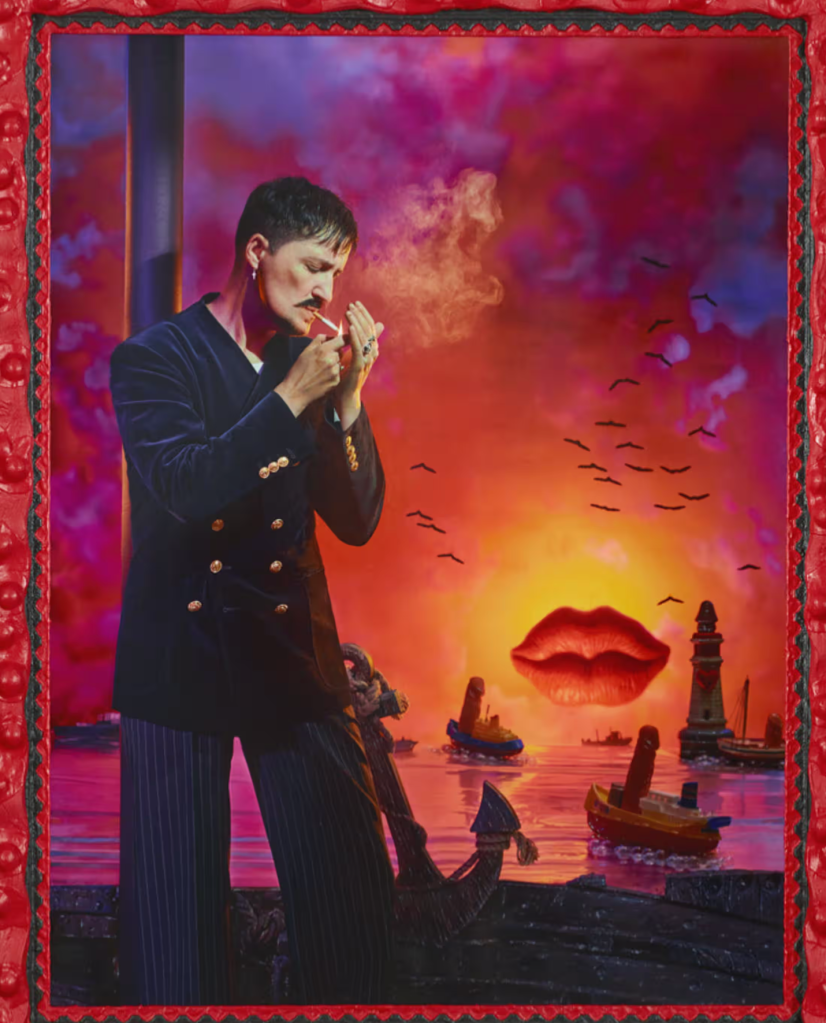
Rather than speaking for all trans and non-binary people, Preciado lets 25 different Orlandos tell their stories, creating a vibrant polyphony that merges Woolf’s prose with personal testimonies. The film depicts Orlandos in natural settings, challenging societal denaturalization of trans individuals. It presents fiction as a healing force and an obsession, with one Orlando claiming to suffer from “literature sickness.” The film advocates for reading as a cure and poetry as a refuge for the marginalized.
“Orlando” is a playful yet serious political work that celebrates freedom from gender norms and reimagines trans narratives beyond psychiatry, medicine, and law. Scenes transform into anarchic punk musicals, and legal battles for documents become rituals of collective healing. Preciado links French feminist and trans activism, highlighting the value of unity over division.
In adapting “Orlando,” Preciado faced the challenge of moving away from the violent and tragic representations of trans people in cinema. He highlights the artifice of filmmaking, connecting it to the constructed nature of gender roles. The film is hybrid and constantly evolving, with visible film sets and DIY costumes, drawing inspiration from Derek Jarman, Ulrike Ottinger, and early Pedro Almodóvar. Preciado’s work offers a creative and wild interpretation of Woolf’s text, celebrating the diversity of trans and non-binary experiences and rejecting narrow identity politics. As queer film theorist B. Ruby Rich noted, it might be “the first trans masterpiece.”
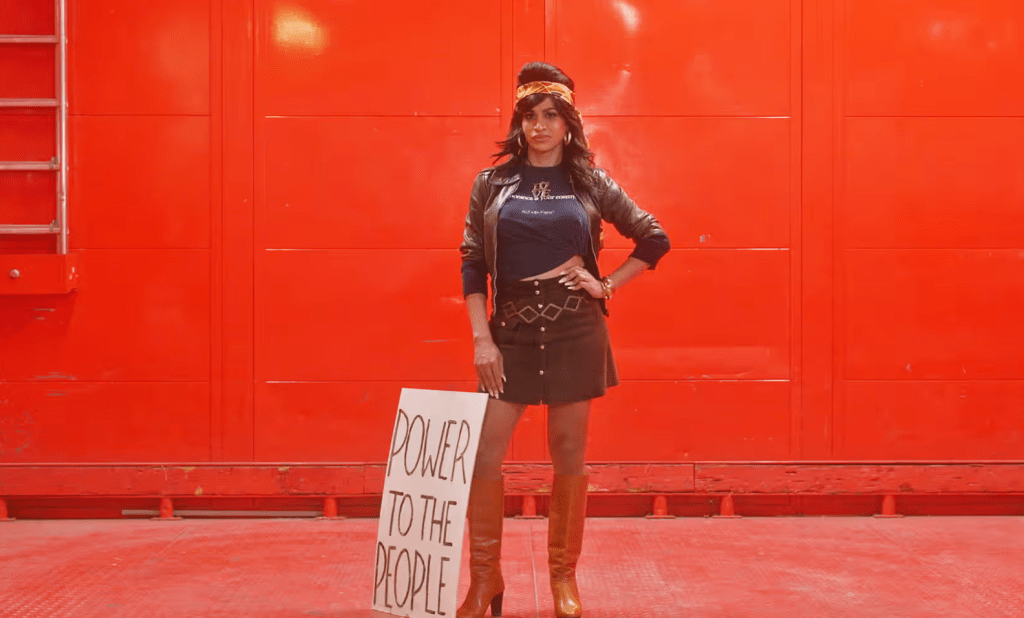
Paul B. Preciado is a writer, philosopher, curator, filmmaker and one of the leading thinkers in the study of gender and body politics. He has served as the Curator of Public Programs of documenta 14 (Kassel/Athens), Curator of the Taiwan Pavilion in Venice (2019), Head of Research of the Museum of Contemporary Art of Barcelona (MACBA). He previously taught Philosophy of the Body and Transfeminist Theory at Université Paris VIII-Saint Denis and at New York University. His books, Counter-sexual Manifesto (Columbia University Press, 2000); Testo Junkie (The Feminist Press, 2008); Pornotopia (Zone Books, 2014); An Apartment in Uranus (Semiotexte and Fitzcarraldo, 2019), and Can the monster speak? (Semiotexte and Fitzcarraldo, 2021) are a key reference to queer, trans and non-binary contemporary art and activism. His last book, Dysphoria Mundi was published in France and Spain in 2022 (Grasset and Anagrama) and will be published in English by Graywolf and Fitzcarraldo in 2024. His first film, Orlando, My Political Biography was awarded four prizes at the Berlinale in 2023, including Special Prize of the Jury for Best Documentary and the Teddy Award for best LGBT documentary. He was born in Spain and lives in Paris.

Serpentine Cinema presented Paul B. Preciado‘s Orlando, My Political Biography, accompanied by a conversation between Paul B. Preciado and Hans Ulrich Obrist, Artistic Director, Serpentine. The screening was be accompanied by a conversation between Paul B. Preciado and Hans Ulrich Obrist, Artistic Director, Serpentine.
Presented in collaboration with Institut Français du Royaume-Uni.
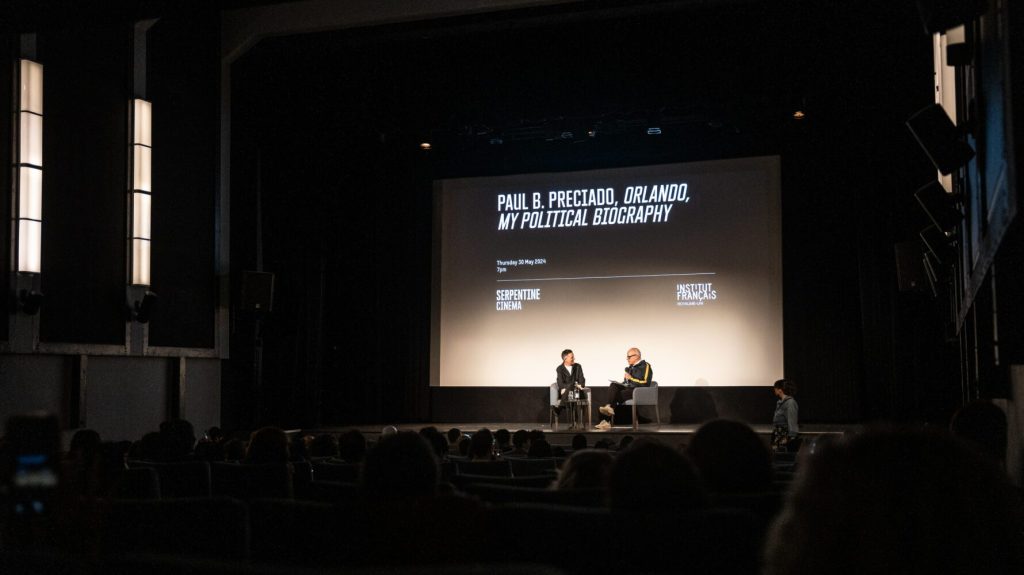
Curated by Kostas Stasinopoulos, Curator, Live Programmes, Serpentine; Diane Gabrysiak, Head of Programming and Exhibition, Institut Français du Royaume-Uni; Daisy Gould, Assistant Curator, Live Programmes, Serpentine and Eva Speight, Curatorial Assistant, Live Programmes, Serpentine.
Production Coordinator: Isobel Peyton Jones
 YASS Magazine