Fleur and Julian wanted to get married in all the countries where same sex marriage was legal. Julian died after their fourth wedding…
What started as a beautiful act of LGBTQ+ protest art quickly turned to tragedy when Belgian artist and activist Fleur Pierets suddenly and unexpectedly lost her wife Julian P. Boom to brain cancer. In 2017, the soulmates were embarking on a special project they had conceived – “Project 22” – so named after the number of countries which had legalised same sex marriage at the time. With an ambitious plan to marry in every country on the list, the pair only managed to cross off New York, Amsterdam, Antwerp, and Paris, before Julian received her devastating diagnosis. Shortly after, she died.
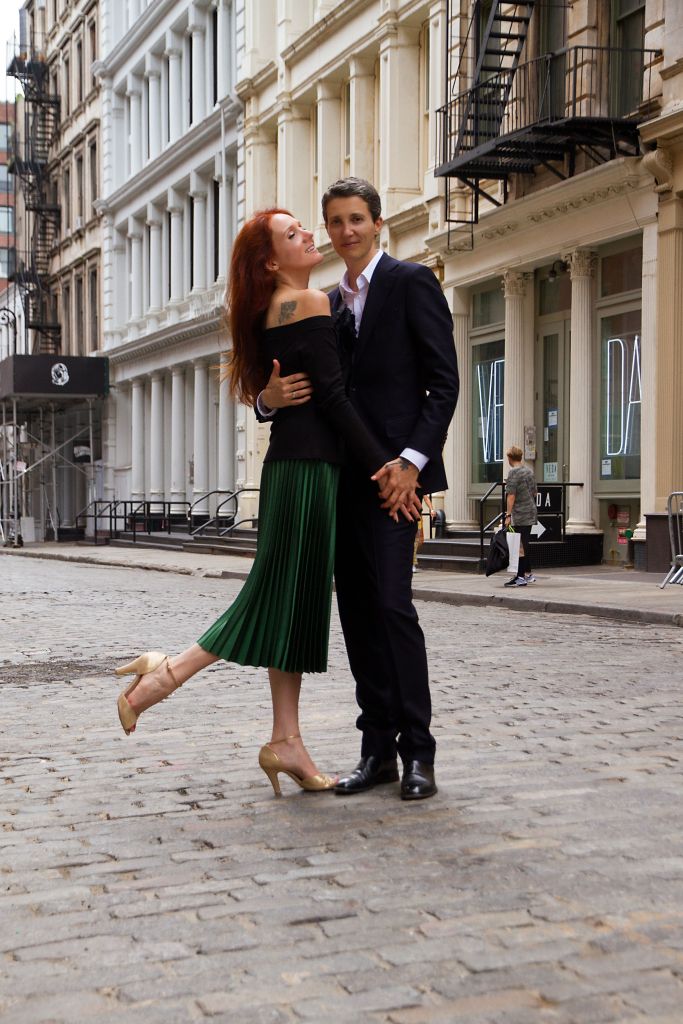
In the years since, the number of countries to recognise same sex marriage has risen to 34 and similarly, Fleur’s love for her late wife has only increased. Amidst such loss, Pierets finds solace through her writing, art practice and LGBTQ+ activism, resulting in this stunning debut memoir which simply but poetically traces the limits of what grief can do to a person.
Julian is also an uplifting recounting of two women in love – from the exciting, early days of their relationship to its untimely ending. Fleur’s late wife Julian can be felt on every page, reminding us that no one ever really dies; it is memory which keeps us all alive.
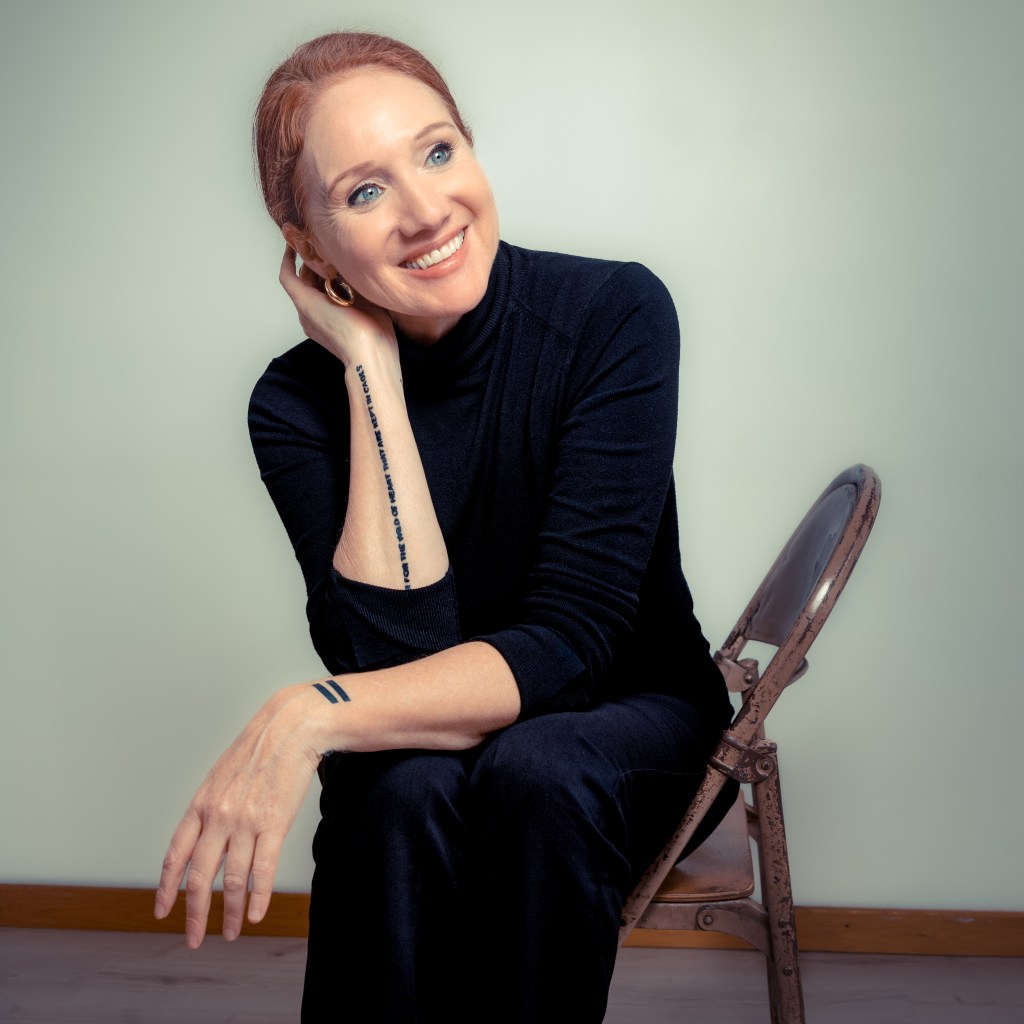
With a nod to literary forebears such as Joan Didion, readers are hailing Julian a “LGBTQ+ version of The Year of Magical Thinking,” while acclaimed American writer and essayist Siri Hustvedt has praised Pieret’s text for being “swift and lean and moving.” The book is currently being adapted into a film by Oscar-nominated filmmaker, Lukas Dhont.
Translated from Flemish into English for the first time by Elisabeth Kahn, Julian also marks the debut nonfiction title from fairtrade indie publisher 3TimesRebel Press, whose ethos can be explained as three-fold rebel: only translations from minority languages; only works by women; and only books which deal with challenging themes.
How did you come up with the idea about this book?
In 2017, my wife Julian and I launched 22 The Project, a performance art piece in which we planned to get married in every country that legalised same-sex marriage at the time. Julian died of cancer after 4 weddings.
Please talk to me about Project 22 and what it means to you.
One day we were eating with friends and the conversation lead to same sex marriage.
At that moment we found out that 4 of our very open-minded friends had no idea that we could only get married in 22 countries (we’re talking 2017 here).
So we started thinking… How can we get that number out there. Because everybody captures what’s in their comfort zone. And that’s understandable but, like everything, change starts with knowledge. And as you may or may not know, homosexuality is still Illegal in 70 countries and you can get sentenced to death in 11.
We wanted to make a project to let people know that in most countries around the world you can’t get married when you are gay. And we wanted it to be a positive project. Because in our opinion, that was the first step towards lasting change and building bridges
We figured that marriage and love – something that everyone can relate to – was a perfect starting point to raise awareness, and Julian and I decided to get married in all the countries where same-sex marriage was allowed.

How did your life change after the death of Julian and how did activism appear in your life?
Activism has always been in my life but a lot has changed since Julian died; I not only lost the love of my life but also my job – because we worked together. I had no house or belongings anymore because we had sold everything. I was left with 2 suitcases and €125 in my bank account.
It’s been 5 years since this happened and the only thing that keeps me here, the only thing that keeps me going in this life, is my deep empathy and compassion for human suffering.
And the idea that maybe I can do something about that. That my job isn’t done yet.
You have dedicated her life to campaigning for LGBTQ+ rights, keeping alive the memory of Julian through your writing and art practice. Where do you find your inspiration?
My inspiration comes from everyday life:
– 1/3 of Poland and Hungary have been declared LGBTQ-free
– There are still 320 million girls forced into child marriages while we are conquering Mars
– And the American Court of Appeal renounced the Roe vs. Wade ruling, which gave the states the right to criminalize abortion again.
And these are just 3 examples so there’s enough work to do.

How important is writing for you?
It’s a life line. For me writing and literature is a way to understand the world around me. A way for me to make sense of life, so if I don’t understand something I start searching and digging. Just until I can get my head around it. Until that new person – that new me who doés understand – appears on paper and hands me a manual that I can hopefully pass on.
You have founded with your wife a magazine featuring conversations with queer musicians, visual artists, writers, and performers. Do you still run this magazine?
No. I was writing the articles and Julian did the photography and the design. We made 20 editions. For me this project has been completed (and I don’t want to work with somebody else on this).
Do you think there is enough queer representation in the arts sector nowadays?
There is quite some queer representation nowadays but not always the right ones. Some are just ticking off the diversity-box. However marginalized groups are becoming louder, movements are being formed and some female artists are even being written back into history. There is still a lot of work to do, but we’re currently demanding our right to take up space. So that’s a good thing.

How is the life of LGBTQ+ people now? Have things improved?
A lot of things are happening at the same time. For example: currently same-sex marriage is legalised in 35 countries, but at the same time the political right is scoring with anti-lgbtqia+ propaganda. For every five steps forward, there is a backlash of 3 steps. But in the end, we will eventually have made progress. It’s just that I’m not a very patient person.
What are your future plans?
Following the untimely death of my wife, I turned to writing which led to my debut memoir Julian. Published in Dutch by Das Mag and in English by 3TimesRebel Press.
I wrote a two-volume children’s book Love Around the World and Love is Love, in which I fulfill the dream of tour wedding project. Itwas published in the USA by Six Foot Press in 2020 and beautifully illustrated by Fatinha Ramos.
I talk at LGBTQ centers, consulates and embassies worldwide, and at companies like Google and WeWork in New York, about the work Julian and I did as a female artist couple, about the importance of inclusion and the need to keep on working as a human rights advocate by launching bridge-building projects.
Julian is currently turned into a movie, produced by The Reunion, house of award winning director Lukas Dhont (Girl, Close) – and I’m co-writing the scenario.
I recently launched my 4th book Heerlijk Monster at Dutch publisher Das Mag in 2022 and a new children’s book – Alle Dagen Sneeuw – in 2023.
I’m currently writing an opera, a novel and I’m working on a new performance piece which will premiere in March 2024.
Julian, by Fleur Pierets (and translated by Elisabeth Khan) is published by 3TimesRebel Press
 YASS Magazine