Museum of the Home presents its first theatre play with On Railton Road this autumn at 136 Kingsland Road, London E2 8EA
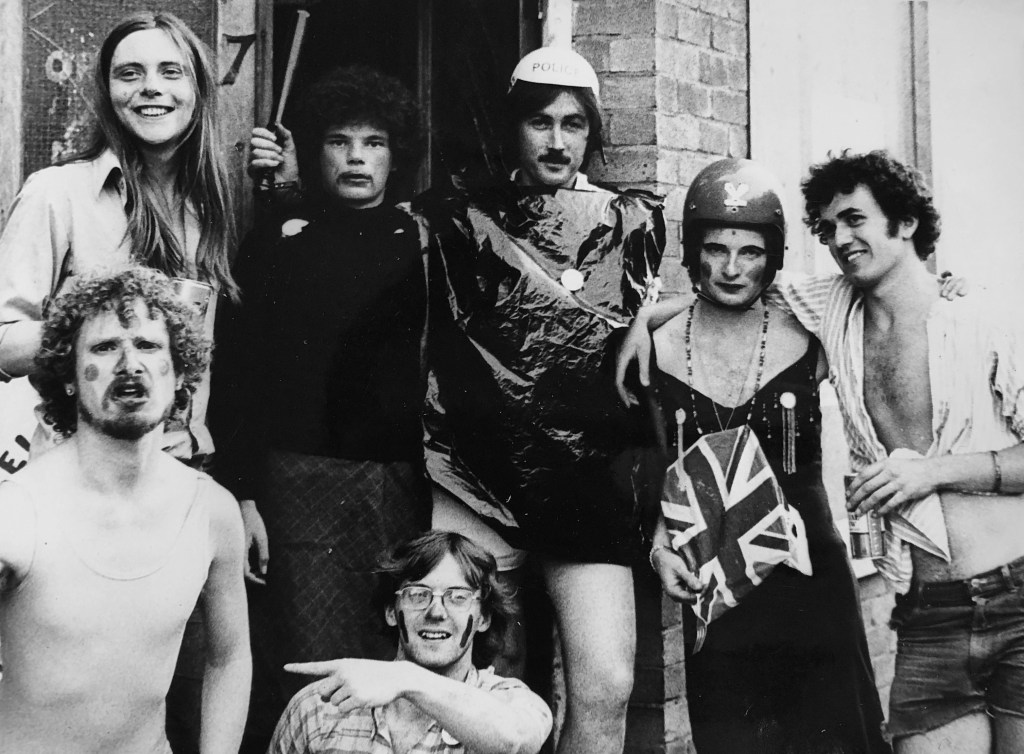
“Come the revolution I’ll walk the streets naked. Flecked with badges and blood.”
A powerful and moving story of queer communities in Brixton, On Railton Road is the first theatre production to be staged at Hackney’s amazing Museum of the Home. Based on real people and their lived experiences of squatting in the 70s, this landmark production will utilise rare archival interviews to bring this revolutionary period to life on stage, highlighting domestic spaces, making Museum of the Home the perfect setting.
From 1971, until Brixton was set ablaze during the uprisings of 1981, Railton Road became a hub of unrepressed activist energy and thus became a magnet for a thrillingly diverse collection of individuals whose mission was to turn the world upside down. Developed with the support of Jerwood Arts, Artist and Director Ian Giles (A Reflection in Time, BBC Sounds) and founder of The Brixton Pansies theatre troupe, was heavily inspired by the lively activist theatre groups of the 1970s when first devising the show back in 2021.
On Railton Road is a play about homemaking, freedom and a pioneering family of gay men who fought to have their voices heard. Following the lives of four friends who resided on Railton Road, this electric production will immerse audiences directly in the action through puppetry, verbatim theatre and scripted drama as the company re-tell this rich and expansive story.
Writer Louis Rembges is the recipient of the BOLD 2023 Playwriting Prize, as well as an alumni of the Royal Court’s Intro to Playwriting Group; his script will be supported by a score devised by Sophie Crawford (War Horse, The National Theatre; Amelie the Musical, UK Tour) All puppetry is designed by award-winning London-based puppet artist, Olives James Hymans who has created puppets for events at Tate Moden and the National Gallery.
Director Ian Giles comments, I am so excited to be sharing this story about a group of gay men who not only saved their street from demolition, they also helped pave the way for generations of LGBTQIA+ people to live openly and freely. Their visibility changed lives. It will be fantastic to mount a full scale production of our play at the Museum of the Home within an immersive space that will bring this hidden London story to life!
YASS interviewed the creators of On Railton Road, Ian Giles and Louis Rembges.
Please talk to us about “On Railton Road”. What shall we expect?
On Railton Road is a hedonistic drama about a raggle-taggle group of gay squatters who fought for a place to call home.
What is the message you want to spread with this play?
We are cockroaches in heels. Something that became clear during the creation of this play is the cyclic nature of our queer history and our queer today. The hedonism, the joy, the prejudice, the politics.The gay men our play is based on set the wheel in motion for the rights and benefits we as queer people benefit from now, but it’s all too clear that the bigotry they faced has reared its head again through another desperate Tory government. The rampant transphobia in the UK is an effort to scapegoat a minority, to fearmonger as methods of distraction. To divert attention from themselves to try and make a ‘common enemy’. Our message is: just like it didn’t work then, it will not now. In the 1970s gay people began to make spaces within society and fought to ensure their voices were heard; the mantra of the Gay Liberation Front was ‘Gay is Good’ – a message that still needs to be held aloft around the world today. Gay is good, it is strength, it is trans joy and it is not going anywhere.
What was the life of the gay men in Brixton during the 70s?
Brixton was a melting pot, a run-down area of white working-class residents living side by side with West Indians families, many of whom were the Windrush generation, and then along came a whole load of mostly young white people, many middle-class, looking to solve their housing problems. The influx of these ‘new’ people evolved into ground-breaking political activism and an experiment in ‘alternative living’.
There is a brilliant sense of positive gay energy in the 1970s. Gay sex had be partially decriminalised in 1967 and with it these gay men in South London decided it was time for them to be seen. It’s the time of the Gay Liberation Front and The Campaign for Homosexual Equality (CHE); a period when LGBTQI+ people start to find their feet and come together. The 70s get left out of LGBTQ+ histories or are overshadowed by AIDS and then Thatcher. The 70s are undoubtedly a key decade in LGBTQI+ rights, they worked from the inside out.
What was the significance of Railton Road in the 70s?
On Railton Road there was a row of houses where across a ten year period over 60 gay men passed through. Close by were women’s squats and black squats. Men came over from Ireland and because airfares came more affordable men visited from Australia. In the 70s over 30,000 people squatted across london. Squatting enabled gay men to live together like never before – they had the creative freedom to make new spaces, protest and make art.
How did you manage to find these rare archival interviews to bring this revolutionary period to life?
I was researching the Gay Liberation Front because I was interested in the activities of pioneering gay people in London. References to communes and squats kept coming up in my reading. Amazingly Ian Townson and some of the other squatters interviewed each other in the 70s and 80s. So I was able to read over 700 pages of conversations with the men who squatted together. I was drawn to their vitality; they opened a Gay Centre – they established a helpline called Icebreakers – they even ran for local election. They were active and they were trying to lead change.
Ian , as a director of The Brixton Pansies, how was your experience directing this piece?
This play is a huge collaboration, I am excited by all the knowledge coming into the room. I have loved working with musician Sophie Crawford, together we have created lively score for the play and we are resurrecting ‘A Gay Song’ originally sung in the 70s by a community group called Everyone Involved. This song is thought to be the first gay protest song written, performed and recorded in the UK. Oliver James-Hymans has made bombastic puppets and noses on sticks to bring the squatters street-theatre to life. Using Oliver’s creations to perform ‘Mr Punch’s Nuclear Family’ has been hilarious, the actors are having a whale of a time. Working with Louis to develop this production has been a joy – our collaboration is fluid and creative. The script has been tweaked very slightly since the 2021 production, plotlines polished and any excess trimmed – It zips along and is quite a ride!

Louis, As the writer what were the biggest challenges you have faced and what did you enjoy most while working on this performance?
I’ve never written under commission before, so this was a brand new experience for me and very different to what I’m used to. I didn’t know much (or anything) about Brixton’s queer squatting history, and so I began by going through Ian’s research and materials to start from the ground up and create something that both realistically captures the era and honours the people involved. This turned out to be the greatest joy of working on this project; learning and spotlighting queer history that isn’t drenched in the trauma of the 80s. It seems that often the AIDS pandemic is viewed by straight audiences as our only history – and imperative as it is that this history is taught and known – queer people deserve to watch the rich tapestry that is our shared heritage in all forms of art – to educate themselves and others on who we are and what we as queer people have achieved. If working on this play has demonstrated anything it’s that if a story this big came from a single postcode in 1970s Brixton, what other unfound queer stories littered through time are waiting to be told?

31st October – 18th November 2023 | Get Tickets: museumofthehome.org.uk
 YASS Magazine