Renowned explorer and popular LGBT speaker, Justin Bengry, changed the landscape of LGBTQ+ education after launching an MA in Queer History. In this insightful interview for Pride Month, Justin touched upon his research into the LGBTQ+ community and capitalism, commonly known as the ‘pink pound,’ and reflected on how the UK views queer history.
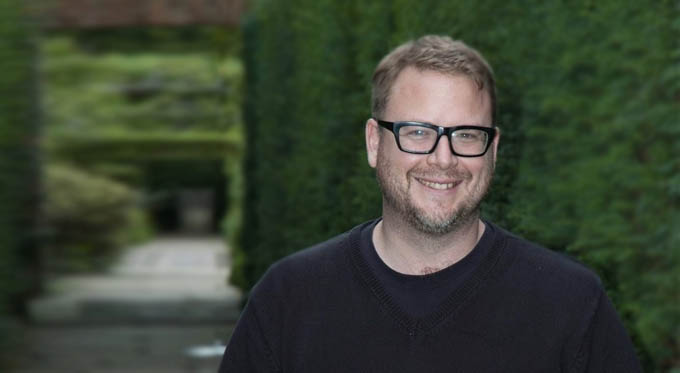
Can you describe your research into the LGBTQ+ community, capitalism and some of your most poignant findings?
“My research focuses on a kind of pre-history of the ‘pink pound.’ I think most of us, even queer people, assume that business hasn’t been particularly interested in us or that we haven’t been engaged with it until say the 80s and 90s. Maybe the 70s post-gay liberation, if we’re lucky.
“My research shows, in fact, there are more than 100 years of engagement between business enterprise and queerness, in multiple ways. So, this pre-history of the pink pound really explodes the idea that It’s only about businesses trying to profit from our spending power or us using that spending power politically to support or boycott certain businesses. In fact, there are lots of ways that queerness and homosexuality have been profitable for businesses for more than a century.
“This may include selling particular ideas of homosexuality to wider audiences or even profiting off the idea of homophobia. I think once we start thinking more expansively about what this can include, it just expands astronomically the kinds of histories we can explore that are relevant to these questions.”
Do you believe queer history is given the respect it deserves in the UK, and if not, what more needs to be done?
“There’s an increasing interest in queer history in the UK and I recall in 2017 with the 50th anniversary of the partial decriminalisation of homosexual acts between men. A lot of cultural organisations, heritage organisations, and government departments, everybody was waving the banner and doing their bit for queer history or LGBTQ+ inclusion.
“I think there was a great fear that after 2017, that would all just collapse and of course there are other anniversaries for other groups and other issues that are being celebrated, but I’ve been quite pleased that as much as we’re not in 2017, we’re still seeing a lot of interest for LGBTQ+ histories.
“There’s great work being done by LGBTQ History Month and Pride Month, and they’ve been expanding enormously to include all kinds of groups. But there’s much more that can be done, and I think that interest is compelling more work going forward.
“There’s more that needs to be done in schools. England for instance, does not yet require LGBTQ history in schools – that has been done in some places in the States and in Scotland. So many teachers that I speak to are really hungry and eager to do so, but we need policy to require that.
“Businesses themselves have approached me to speak about LGBTQ history and their employees are really interested to learn about their own histories if they identify as queer or LGBT. Even if they don’t, they’re interested in learning more about the histories that are associated with their friends, colleagues and family members.”
What is your proudest professional achievement?
“My proudest professional achievement really is launching the MA in Queer History, and that is something that I never expected to be able to do. I’m in the unique position of one of a tiny number of people in the world whose entire professional responsibility is around queer history. That was impossible 10 years ago. That was impossible when I was doing my PhD. That was impossible when I was in school.
“I couldn’t have imagined that my life would take me to London, leading a programme like this. Ultimately a small-town boy from Western Canada, I didn’t think that I’d be doing it from such a place as the University of London. So, I’m proud to be able to tell these stories, create these histories and teach them to others.”
What do you hope people take away from your speeches?
“What I hope when people hear me speak about queer history… they’ll get a sense that this actually isn’t some minority interest, it isn’t some marginalised history, but it’s embedded in British history, in all histories. I hope they know that it’s important to understand the widest experiences of people, whether they’re LGBTQ+ or otherwise.” This interview with Justin Bengry was conducted
 YASS Magazine